
Food Grade Dry Ice Supplier in UAE – What Every Business Should Know

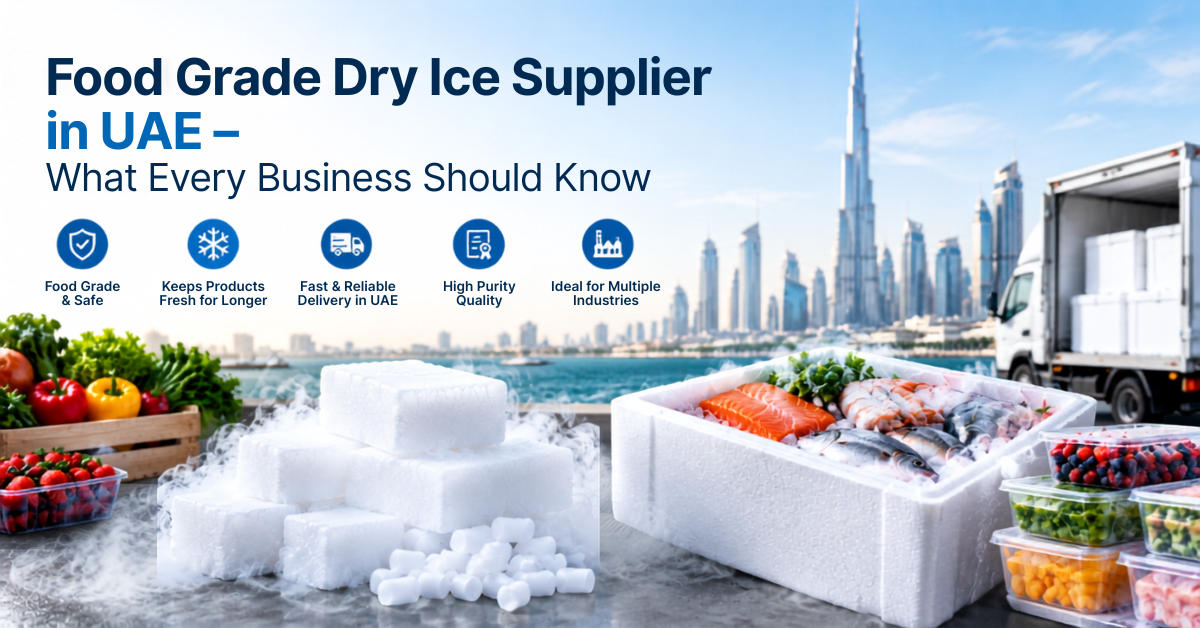
Dry ice has quietly become one of the most valuable tools for businesses across the UAE, from bustling restaurant kitchens in Dubai to seafood exporters in Sharjah and catering companies preparing for large-scale events. Its ability to keep products frozen without leaving behind any liquid residue makes it uniquely suited to the region’s hot climate and fast-paced logistics environment. But not all dry ice is created equal, and any business that works with perishable food, beverages, or ingredients needs to understand the difference between industrial-grade and food grade dry ice before placing an order.
Whether you run a catering company, manage a cold storage facility, operate a cloud kitchen, or handle seafood and meat exports, choosing the right food grade dry ice supplier in the UAE can directly affect product quality, customer safety, and regulatory compliance. This guide breaks down what food grade dry ice actually is, why it matters, and what to look for when selecting a supplier you can depend on.
What Is Food Grade Dry Ice?
Dry ice is simply carbon dioxide (CO2) in its solid form, cooled to around -78.5°C. At this temperature, it does not melt into a liquid the way water ice does. Instead, it sublimates, turning directly from solid to gas, which is exactly why it is so popular for keeping food frozen and dry during storage, transport, and display.
Food grade dry ice is produced from CO2 that has been sourced and processed to meet food safety standards, meaning it is free from oil residues, heavy metals, and other contaminants that can be present in dry ice manufactured for purely industrial purposes such as cleaning, special effects, or manufacturing. Because food grade dry ice is safe for direct or indirect contact with food and beverages, it is the only type that should ever be used in kitchens, food transport, or anywhere it might come near something people will eat or drink.
Industrial dry ice, by contrast, is manufactured with fewer purity controls, since it is intended for applications like dry ice blasting or equipment cooling where food safety is not a concern. Using industrial dry ice around food is a genuine risk, and it is one of the most overlooked compliance issues among businesses that order dry ice without asking about its grade.
Why UAE Businesses Need Food Grade Dry Ice?
The UAE’s climate, combined with its position as a major regional hub for food trade, hospitality, and logistics, makes reliable cooling solutions essential. Ambient temperatures regularly exceed 40°C for several months of the year, which puts enormous pressure on any business that needs to keep products cold during handling, storage, or delivery.
Food grade dry ice has become a preferred solution for many UAE businesses because it:
- Keeps products colder for longer than standard water ice, without adding moisture or weight
- Leaves no wet residue, which matters for packaging integrity and hygiene
- Is easy to transport in insulated containers or boxes without special refrigeration equipment
- Works well for both short local deliveries and longer export shipments
- Helps meet food safety expectations set by regulators and international buyers
Industries that rely most heavily on food grade dry ice in the UAE include restaurants and catering companies, cloud kitchens and food delivery platforms, seafood and meat exporters, ice cream and dessert manufacturers, bakeries supplying frozen goods, and event organizers who need to keep buffets, beverages, or displays cold for hours at a time.
Key Differences Between Food Grade and Industrial Dry Ice
Not every supplier makes this distinction clear, so it is worth understanding the core differences before you order:
- Purity: Food grade dry ice is produced from CO2 that meets food safety purity thresholds; industrial dry ice is not held to the same standard.
- Source of CO2: Food grade CO2 is typically sourced and filtered specifically for consumption-adjacent use, while industrial CO2 may come from processes with byproducts unsuitable for food contact.
- Packaging: Reputable suppliers package food grade dry ice separately, using clean, food-safe handling procedures from production through delivery.
- Documentation: A genuine food grade supplier should be able to explain, when asked, how their dry ice is produced and handled to remain food-safe.
- Intended use: Industrial dry ice is designed for tasks like surface cleaning or equipment cooling, not for anything that will touch or sit near consumables.
Businesses that unknowingly use industrial dry ice for food-related purposes risk contamination, regulatory issues, and reputational damage, all of which are avoidable simply by asking suppliers the right questions upfront.
Safety Standards and Handling Guidelines
Even food grade dry ice needs to be handled carefully, since it is extremely cold and releases CO2 gas as it sublimates. Businesses working with dry ice regularly should keep the following in mind:
- Always handle dry ice with insulated gloves; direct skin contact can cause burns similar to frostbite
- Store dry ice in insulated but ventilated containers, never in fully sealed or airtight containers, since pressure from the released gas can cause them to rupture
- Keep storage and transport areas well ventilated, since CO2 gas can build up in enclosed spaces like small vehicles or walk-in coolers
- Never store dry ice in a standard freezer, as it is colder than most freezers are designed to handle and can damage the equipment
- Keep dry ice away from children and untrained staff, and clearly label containers
- Dispose of unused dry ice by allowing it to sublimate in a well-ventilated area rather than putting it down a drain or into sealed trash
Training staff on these basics is a small investment that prevents accidents and keeps operations running smoothly, especially for businesses that use dry ice daily.
How to Choose the Right Food Grade Dry Ice Supplier in UAE?
With demand for dry ice rising across Dubai and the wider UAE, more suppliers have entered the market, but quality and reliability still vary significantly. Here is a practical checklist for evaluating a supplier:
- Confirmed food grade quality: The supplier should clearly state that their dry ice is food grade and be able to explain their production and handling process.
- Consistent availability: Dry ice sublimates over time, so businesses need a supplier who can deliver reliably and on short notice, without stock shortages.
- Proper packaging: Look for suppliers who use insulated, food-safe packaging designed to slow sublimation and protect the product during transit.
- Delivery speed and coverage: Since dry ice has a limited shelf life, fast, well-organized delivery across Dubai and the wider UAE matters more than it would for most other supplies.
- Transparent pricing: Reliable suppliers offer clear pricing based on quantity and delivery requirements, without hidden charges.
- Responsive customer support: Businesses often need dry ice on tight timelines, so a supplier that is easy to reach and quick to respond is a real advantage.
This is the standard that Ice Dry Ice, a Dubai-based supplier, has built its service around, focusing on consistent food grade quality, dependable delivery, and packaging suited to the UAE’s climate. For businesses that depend on dry ice regularly, working with a supplier who understands these operational realities, rather than treating dry ice as an afterthought, makes a noticeable difference over time.
Common Applications of Food Grade Dry Ice in UAE Businesses
Food grade dry ice is used across a wide range of business types in the UAE, including:
- Restaurants and catering companies keeping ingredients and prepared dishes cold during off-site events
- Cloud kitchens and food delivery services preserving frozen or chilled items during last-mile delivery
- Seafood and meat exporters maintaining product freshness during transport to markets and airports
- Ice cream, gelato, and frozen dessert businesses transporting products without melting
- Bakeries and dessert suppliers shipping frozen cakes or pastries
- Event planners and hospitality teams keeping buffet displays, beverages, or ice sculptures cold for extended hours
- Home bakers and small food businesses needing reliable small-batch cold packaging
Frequently Asked Questions
1. How long does food grade dry ice last?
This depends on the quantity, packaging, and storage conditions, but as a general rule, dry ice sublimates gradually when stored in a good insulated container, with larger quantities and better insulation slowing the process down significantly compared to small, loosely packed amounts.
2. Is food grade dry ice safe to place directly on food?
Food grade dry ice can be placed near or in indirect contact with food for cooling purposes, but it should never be consumed directly or allowed to touch food in a way that it could be accidentally eaten, since it can cause severe burns to skin and tissue.
3. Can I order food grade dry ice in small quantities for personal use?
Many suppliers, including Ice Dry Ice, offer flexible order sizes suited to both large commercial needs and smaller personal or one-off event requirements.
4. What is the price difference between food grade and industrial dry ice?
Pricing can vary by supplier, but food grade dry ice is often priced similarly to industrial dry ice, since the primary difference lies in sourcing and handling standards rather than raw material cost. It is worth asking suppliers directly rather than assuming food grade options are significantly more expensive.
Final Thoughts
For any UAE business that handles food, beverages, or temperature-sensitive products, using genuine food grade dry ice is not just a best practice, it is a basic requirement for safety and quality. Understanding what separates food grade from industrial dry ice, along with proper handling procedures, helps protect both your products and your customers.
Suppliers like Ice Dry Ice have built their reputation in Dubai around meeting exactly these needs, offering food grade dry ice with the consistency, packaging, and delivery speed that food and hospitality businesses depend on across the UAE. Taking the time to choose a supplier who understands these details is a small decision that pays off in product quality and peace of mind.