
Dry Ice Halloween Safety Tips: Handling It the Right Way

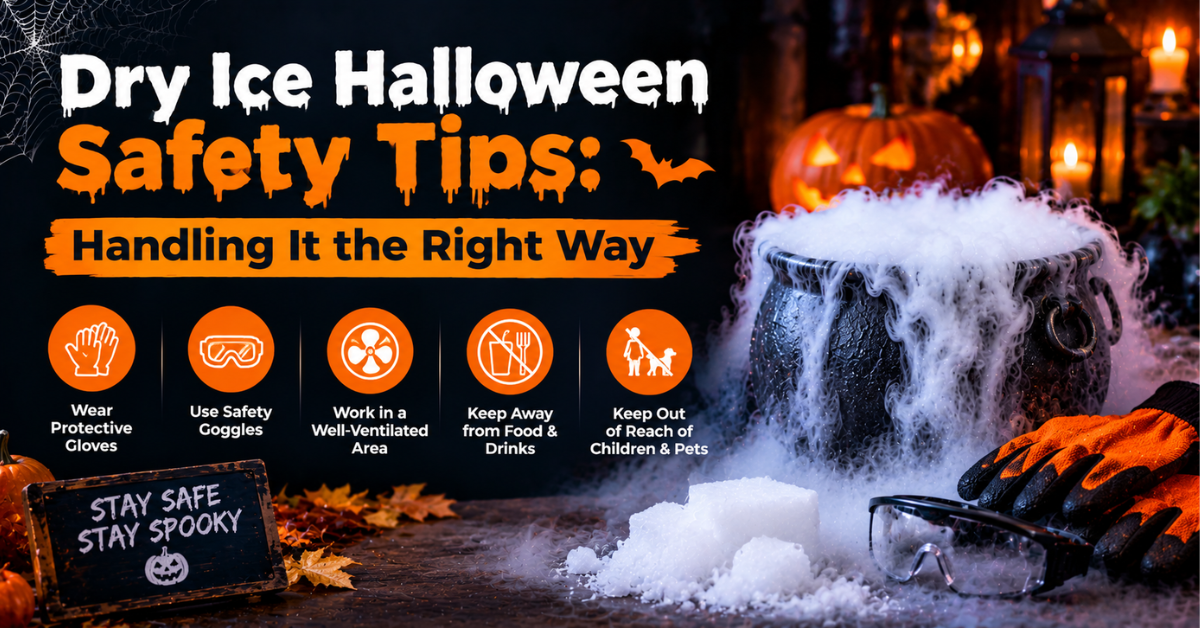
Every year, as Halloween approaches, more people discover how much atmosphere a little dry ice can create. A cauldron of rolling fog, a smoking cocktail or a creeping mist across the floor can turn an ordinary space into something magical. But dry ice is not a toy, and it is not like ordinary ice. It is much colder, it behaves differently and it deserves proper respect.
The good news is that dry ice is perfectly safe to use when you know the rules. They are simple, easy to remember and quick to follow. This guide covers the most important dry ice Halloween safety tips, from handling and storage to ventilation, drinks, transport and what to do if something goes wrong. It is written by the team at Ice Dry Ice, a dry ice supplier in Dubai, because we want every customer to enjoy a great Halloween and finish the night without a single problem.
What Makes Dry Ice Different from Regular Ice?
Understanding what dry ice is makes the safety rules easier to remember.
- It is extremely cold. Dry ice is solid carbon dioxide at about -78.5°C, far colder than a household freezer, which is around -18°C.
- It does not melt. It sublimates, turning straight from solid to gas.
- The gas is carbon dioxide. CO2 is naturally present in the air we breathe, but in high concentrations in enclosed spaces, it can displace oxygen and cause problems.
- It builds pressure in sealed containers. As the solid turns to gas, it expands rapidly. If the gas has nowhere to go, pressure builds.
Every safety rule below comes from one of those four facts: extreme cold, gas release, sublimation and pressure.
Safety Tip 1: Never Touch Dry Ice with Bare Hands
Because of its temperature, dry ice can cause cold burns, similar to frostbite, within seconds of skin contact. Always use:
- Insulated or thick gloves, such as cryogenic gloves or heavy, dry work gloves.
- Tongs, a scoop or a shovel, particularly for small pieces.
Avoid thin, wet or loose gloves. Wet gloves can freeze to the dry ice. Also avoid handling it in short sleeves if you are working with large pieces, and do not let it rest on your skin or clothes.
If you do touch it: Remove it immediately, warm the affected area gently with lukewarm (not hot) water and seek medical advice if the skin is blistered, white, numb or painful.
Safety Tip 2: Ventilation Is Non-Negotiable
This is the rule that people underestimate most. As dry ice turns into gas, it releases carbon dioxide into the air. In a well-ventilated room, this is not a problem. In a small, closed space, it can raise CO2 levels to an unsafe point.
Signs of too much carbon dioxide include headaches, dizziness, rapid breathing, drowsiness and shortness of breath. If anyone experiences these symptoms, move them to fresh air immediately.
How to keep things safe:
- Use dry ice in rooms with good airflow, such as open doors or windows, or working ventilation.
- Do not use large amounts in small, closed spaces such as storerooms, bathrooms, small vehicles or walk-in cold rooms.
- Because CO2 is heavier than air, it can pool at floor level, so be especially careful with low areas, basements and enclosed corners.
- Keep children and pets away from areas where fog collects at floor level.
In Dubai, air-conditioned indoor spaces are common. These are often sealed to keep cool air in, so it is worth opening a door or keeping fresh air circulating when you use dry ice indoors.
Safety Tip 3: Never Seal Dry Ice in an Airtight Container
This is one of the most dangerous mistakes. Never put dry ice in:
- A closed glass jar or bottle.
- A sealed plastic container or soda bottle.
- A screw-top flask or vacuum flask.
- A sealed cooler with a locked lid.
Pressure from the gas can cause containers to explode, sending fragments flying. Always use an insulated container with a loose-fitting lid, or a vented cooler, so gas can escape.
Safety Tip 4: Do Not Store Dry Ice in a Freezer or Fridge
It may seem sensible to store dry ice in a freezer, but it is not. The extreme cold can damage the thermostat and the appliance, and the closed space allows pressure and CO2 to build up. Instead, store it in an insulated cooler with the lid on loosely, in a cool, shaded and well-ventilated place.
Do not leave it in direct sunlight, and do not put it in a closed room. Keep it out of reach of children and pets.
Safety Tip 5: Transport It Carefully
If you are collecting dry ice yourself, treat the journey with care.
- Carry it in an insulated container with a loose lid.
- Put it in the boot or a ventilated cargo area when possible.
- If you have to carry it in the cabin, open a window a little and keep the trip as short as you can.
- Never leave dry ice in a parked, closed car, particularly in the UAE heat.
- Take it straight home or to your venue and do not make additional stops.
In a closed car, CO2 levels can rise quickly, and drivers can feel unwell without realising why.
Safety Tip 6: Keep It Away from Children and Pets
Dry ice looks interesting. Fog fascinates children, and pets are curious by nature. Neither understands the danger.
- Place fog containers out of reach, such as on high tables or behind barriers.
- Make sure an adult is always responsible for handling dry ice.
- Explain to older children that it is something to watch and not to touch.
- Never allow anyone to put dry ice in their mouth, drink it or swallow it.
At children’s parties, it is wise to treat dry ice as a stage effect that only adults operate.
Safety Tip 7: Be Extra Careful with Drinks
Smoking cocktails and punches are among the most popular uses for dry ice at Halloween, and they are also where the risk of swallowing it is highest.
Never:
- Allow anyone to swallow a piece of dry ice.
- Serve a drink that still contains visible dry ice to a guest.
- Put dry ice in a child’s drink.
- Allow guests to hold dry ice in their mouths for effect or as a dare.
Instead:
- Use the separate-vessel method, with the dry ice in a different container from the drink.
- If dry ice is added to a drink, wait until it has completely disappeared and stopped bubbling before serving.
- Use food-grade dry ice for any use near food or drink.
- Remove any remaining pieces before the guest drinks.
Swallowing dry ice can cause serious internal injury. If this happens, seek emergency medical help right away and do not try to induce vomiting.
Safety Tip 8: Use the Right Containers
Sudden extreme cold can crack fragile materials.
- Good choices: metal buckets, sturdy plastic tubs, thick, tempered glassware and insulated coolers.
- Poor choices: thin glass, delicate ceramic, decorative glasses and any container that is already cracked or chipped.
For cauldrons and decorative props, add a metal or heat-safe liner so the dry ice and water do not touch the prop itself.
Safety Tip 9: Watch Out for Slips and Spills
Fog containers produce water and condensation. Wet floors are slippery, particularly in dark Halloween settings.
- Place containers on stable surfaces, away from walkways.
- Wipe up spills quickly.
- Use a tray under containers to catch drips.
- Keep lighting good enough that people can see where they are walking.
A dark, foggy room can hide wires, steps and objects on the floor. Check your party space for trip hazards before guests arrive.
Safety Tip 10: Handle Large Quantities with Extra Care
If you are running a venue, haunted house or large event, the quantities involved are higher and so are the risks.
- Make sure staff are trained to handle dry ice.
- Provide gloves, tongs and clear instructions.
- Keep storage areas ventilated.
- Consider using CO2 monitors in enclosed areas where you use large amounts.
- Plan fog areas so air can circulate.
- Appoint a safety lead for the event.
If you are planning a large event, see our guides to bulk dry ice for Halloween events and dry ice for haunted houses.
Safety Tip 11: Dispose of It Properly
When the party is over, leave leftover dry ice to sublimate completely in an open container in a well-ventilated area, away from children and pets.
Do not:
- Pour it down a sink, toilet or drain, because extreme cold can damage pipes.
- Put it in a sealed bin or bag.
- Throw it in a swimming pool or similar water body.
- Leave it in a closed room or vehicle.
Once it has gone, you can empty the water and clean up as normal.
What to Do in an Emergency
Know these steps in advance, so you can respond quickly.
Cold Burn or Frostbite
- Move away from the dry ice and remove any gloves or clothing that are in contact with the skin, unless stuck to it.
- Warm the area gently with lukewarm water. Do not use hot water or rub the skin.
- Cover the area with a clean, dry dressing.
- Seek medical attention for any blistering, white or hard skin, numbness or serious pain.
Swallowing Dry Ice
Call for emergency medical help immediately. Do not induce vomiting.
Dizziness, Headache or Difficulty Breathing
Move the person to fresh air straight away. If symptoms do not improve quickly, or if the person loses consciousness or has trouble breathing, call emergency services.
Eye Contact
Flush with lukewarm water and seek medical help.
In the UAE, you can reach emergency services by dialling 999 for police, 998 for ambulance and 997 for fire. If you are unsure, call the number you would normally use for emergency help in your emirate.
A Quick Safety Checklist for Your Halloween Event
Before guests arrive, run through this list:
- Gloves or tongs are ready and accessible.
- Containers are sturdy and positioned safely.
- The area is ventilated.
- Dry ice is stored in a vented insulated cooler, not a freezer.
- Children and pets are kept away.
- Drinks are prepared with food-grade dry ice and served safely.
- Floors are dry and lighting is adequate.
- Someone responsible is in charge of the dry ice.
- You know where to find help in an emergency.
Why Buying from a Specialist Supplier Helps
A good supplier will not only supply dry ice but also give you clear advice on how to use it. This includes recommending the right form, estimating how much you need, explaining how to store it and answering your questions about safety. At Ice Dry Ice, we are happy to talk you through the details, whether you are planning a small home party or a larger event.
Frequently Asked Questions
Is dry ice dangerous?
It can be if mishandled, but it is safe when used correctly. The main risks are cold burns, swallowing it, pressure in sealed containers and carbon dioxide build-up in poorly ventilated spaces.
Can I touch dry ice briefly?
It is best not to. Even short contact can damage skin. Always use gloves or tongs.
Can dry ice fog make you sick?
The fog itself is mostly water vapour. The carbon dioxide gas is what matters. In a ventilated space, it is not a problem, but in a closed room, it can cause headaches or dizziness.
Is it safe to use dry ice in drinks?
Only when the dry ice is kept separate from what is swallowed, or has completely disappeared before serving. Always use food-grade dry ice for drinks.
How do I store dry ice safely?
In an insulated cooler with a loose lid, in a shaded, ventilated place, away from children and pets. Never in a freezer or a sealed container.
Can I leave dry ice in the car?
No. Carbon dioxide can build up in a closed vehicle. Carry it in a ventilated space, and avoid leaving it unattended.
Enjoy the Fog, Respect the Cold
Dry ice is one of the most exciting ingredients in a Halloween setup, and it is safe enough for everyday use in food, hospitality and events when handled properly. Follow these dry ice Halloween safety tips, and you will be able to enjoy all the fog, drama and atmosphere without worry.
If you have questions about handling, storage or choosing the right amount, the Ice Dry Ice team in Dubai is always happy to help. Contact us before your event, and we will help you plan a spooky, successful and safe Halloween.