
Liquid Nitrogen Price Per Liter: What Determines the Cost

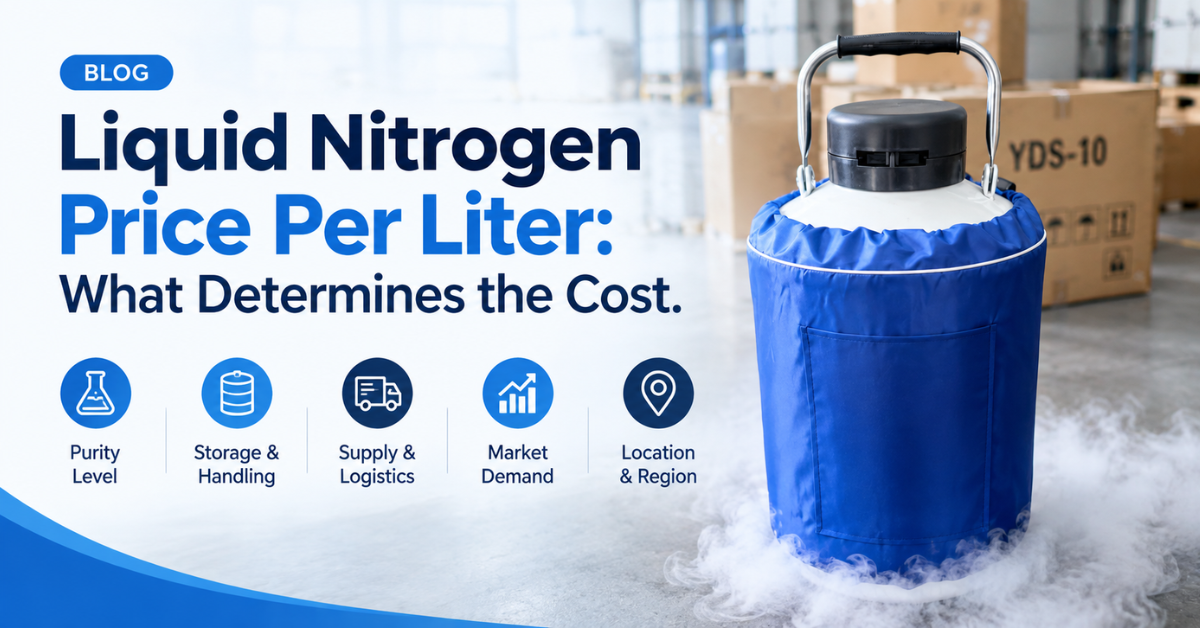
Anyone pricing out liquid nitrogen for the first time quickly discovers that there is no single, fixed rate per liter. Ask three suppliers for a quote and you may get three different answers, not because anyone is being unclear, but because liquid nitrogen pricing depends on several variables that change from business to business. Understanding what drives the price per liter helps you compare quotes fairly and plan your budget with more confidence.
This guide breaks down the key factors that determine liquid nitrogen cost in the UAE, explains why prices vary so much between suppliers and use cases, and offers practical tips for getting accurate pricing and managing your ongoing costs.
Why Liquid Nitrogen Pricing Varies So Much
Liquid nitrogen is produced through an industrial air separation process, stored in specialized cryogenic equipment, and transported in insulated tanks that are far more complex than a standard delivery vehicle. Every stage of that chain, production, storage, and delivery, carries a cost that gets reflected in the final price, and the weighting of each factor differs depending on the customer’s needs.
Key Factors That Affect Liquid Nitrogen Price Per Liter
1. Order Volume
As with most industrial gases, larger volumes typically bring a lower price per liter. A laboratory ordering a small dewar occasionally will usually pay more per liter than a manufacturing facility taking regular bulk deliveries, because fixed costs such as transport and handling are spread across a larger quantity.
2. Delivery Frequency and Scheduling
A business with a standing weekly or biweekly delivery schedule is generally more cost-effective to serve than one that calls for occasional, unpredictable orders. Suppliers can plan routes and production more efficiently around regular customers, which is often reflected in better pricing.
3. Container and Storage Equipment
Liquid nitrogen has to be stored in specialized cryogenic dewars or tanks designed to handle its extremely low temperature and the gradual boil-off that naturally occurs. If a customer needs the supplier to provide or lease this equipment, that cost is usually factored into the overall price. Businesses that already own appropriate tanks may negotiate better rates on the liquid nitrogen itself.
4. Purity Grade
Different applications require different purity levels. Laboratory, medical, and certain food-related uses typically demand higher purity liquid nitrogen than general industrial applications, and higher purity grades usually come at a higher price due to the additional processing and quality control involved.
5. Delivery Distance and Location
Delivering liquid nitrogen requires specialized vehicles and trained drivers, and distance affects cost just as it does with any delivery service. Businesses in central Dubai are often served more efficiently than those in more remote locations across the wider UAE.
6. Urgency
Emergency or same-day deliveries typically carry a premium compared with scheduled, planned orders, since they disrupt a supplier’s regular delivery routes and require additional coordination.
7. Boil-Off and Handling Losses
Liquid nitrogen naturally evaporates over time, even in well-insulated storage, through a process called boil-off. Suppliers factor the expected losses during transport and delivery into their pricing, and businesses should also account for ongoing boil-off when estimating their real consumption and costs.
8. Contract Terms
Businesses that commit to a long-term supply agreement, with predictable volumes, often secure more favorable pricing than those buying on a purely ad hoc basis. Suppliers value the predictability that a contract provides.
Typical Price Ranges: Why We Avoid Fixed Numbers
Liquid nitrogen prices shift over time based on energy costs, production capacity, and overall market demand, and they vary significantly based on the factors above. Rather than quoting a fixed price per liter that may already be outdated by the time you read this, the most reliable approach is to request a current quote from a supplier based on your specific volume, container type, delivery location, and schedule. This gives you an accurate figure rather than a generic estimate that may not reflect real market conditions.
Hidden Costs to Watch For
- Equipment rental or deposit fees for cryogenic tanks or dewars
- Delivery charges not included in the headline price per liter
- Minimum order quantities that push up your effective cost for small needs
- Charges for urgent or out-of-hours delivery
- Boil-off losses from poor storage or infrequent use
- Maintenance costs for storage equipment
How to Get an Accurate Quote
To receive a precise and comparable quote, be ready to share the following details with your supplier:
- Estimated volume needed per delivery and expected frequency
- The purity grade required for your application
- Whether you have your own storage tank or need one supplied
- Delivery location and preferred schedule
- Whether your need is ongoing or a one-time requirement
Suppliers who ask detailed questions before quoting are usually more reliable than those offering a generic number without understanding your actual use case.
Ways to Manage and Reduce Liquid Nitrogen Costs
- Consolidate orders into a predictable schedule rather than frequent small purchases
- Invest in or lease properly insulated storage to reduce boil-off losses
- Match the purity grade to your actual application rather than over-specifying
- Review your usage patterns regularly and adjust delivery volumes accordingly
- Build a long-term relationship with one reliable supplier to access better contract pricing
Why the Cheapest Quote Is Not Always the Best Value
A very low price per liter can sometimes reflect lower purity, less reliable delivery, or a supplier unfamiliar with handling requirements for your specific use case. For businesses using liquid nitrogen in sensitive applications, such as laboratory work, cryotherapy, or food processing, inconsistent quality or late deliveries can cost far more than any savings on the unit price. Reliability, purity, and service should weigh as heavily as the number on the quote.
Getting a Quote From Ice Dry Ice
Ice Dry Ice supplies liquid nitrogen to businesses across Dubai and the UAE, serving sectors from wellness and healthcare to food processing and manufacturing. Because pricing depends on volume, purity, equipment, and delivery requirements, the most accurate way to understand your cost is to discuss your specific needs directly with the team, who can provide a clear, current quote tailored to your business.
How Seasonal Demand Can Influence Pricing
Like many industrial supplies, liquid nitrogen demand in the UAE is not perfectly flat throughout the year. Certain sectors, such as food processing and construction, may see seasonal spikes in usage, and overall demand across the market can shift with broader economic activity. During periods of high demand, availability can tighten slightly, which is another reason businesses with predictable, contracted supply arrangements often fare better than those relying purely on spot purchases.
Budgeting for Liquid Nitrogen as an Ongoing Expense
For businesses with regular consumption, it helps to treat liquid nitrogen as a planned operational cost rather than an occasional purchase. Reviewing usage patterns over several months, accounting for boil-off losses, and discussing a predictable delivery schedule with your supplier all contribute to a more stable, forecastable monthly cost, rather than the unpredictable spikes that come from reactive, last-minute ordering.
How to Track Your Liquid Nitrogen Spending Over Time
Businesses that review their liquid nitrogen invoices over several months, rather than looking at each order in isolation, often spot patterns that help control costs. Tracking price per liter, delivery frequency, and total monthly spend makes it easier to notice seasonal changes, evaluate whether a contract arrangement would help, and have more informed conversations with your supplier about pricing and scheduling going forward.
How Supplier Relationships Affect Long-Term Pricing
Businesses sometimes assume that requesting a new quote from a different supplier every few months is the best way to secure the lowest price, but this approach can work against them over time. Suppliers often reserve their most competitive rates for established, reliable customers whose volumes and schedules they understand well. A business that frequently switches suppliers may miss out on the loyalty-based pricing, priority delivery, and flexible support that come from a longer-standing relationship, even if an individual quote looks attractive on paper.
Frequently Asked Questions
Why do laboratories often pay more per liter than factories?
Laboratories frequently need higher purity grades and may order in smaller volumes, both of which tend to increase the price per liter compared with large-scale industrial orders.
Does the type of storage tank affect the price?
Yes. If a supplier provides or maintains the cryogenic tank, that cost is typically factored into your overall pricing, while customers with their own suitable equipment may pay only for the liquid nitrogen itself.
How often should I expect prices to change?
Prices can shift with energy costs and market conditions, so it is best to request a current quote rather than relying on figures from the past.
Can I negotiate better pricing for regular orders?
Many suppliers offer improved rates for predictable, scheduled volumes, so it is worth discussing a standing order arrangement if your usage is consistent.
Final Thoughts
Liquid nitrogen price per liter depends on a combination of volume, purity, equipment, delivery distance, and scheduling, which is why there is no single number that applies to every business. Understanding these factors helps you request accurate quotes, compare suppliers fairly, and plan your costs with confidence.
For UAE businesses looking for clear, current pricing and dependable delivery, Ice Dry Ice offers liquid nitrogen supply built around your actual usage, rather than a one-size-fits-all rate that may not reflect what your business really needs.