
Choosing the Right Liquid Nitrogen Storage Tank for Your Business

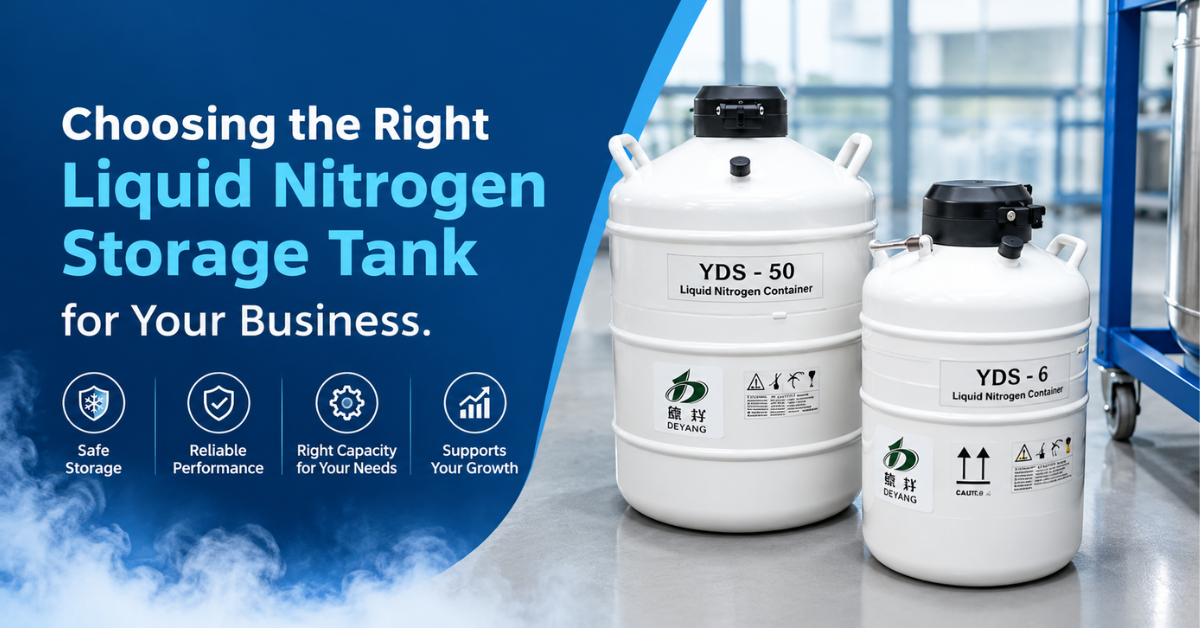
Liquid nitrogen is only as useful as the equipment that stores it. Choose the wrong tank and you may face excessive product loss, safety risks, or a system that simply cannot keep up with your business needs. Choose the right one, and liquid nitrogen becomes a dependable, manageable part of your daily operations, whether you run a laboratory, a cryotherapy clinic, or an industrial facility in the UAE.
This guide walks through the main types of liquid nitrogen storage tanks, how to size them correctly, what affects performance, and the safety and maintenance factors every business should understand before investing in storage equipment.
Why Proper Storage Equipment Matters
Liquid nitrogen is stored at extremely low temperatures and naturally evaporates over time through a process called boil-off. The quality of your storage tank directly affects how much product you lose to evaporation, how safely it can be stored and accessed, and how efficiently your operation runs day to day. Poor-quality or poorly maintained storage equipment leads to wasted product, higher costs, and increased safety risk.
Types of Liquid Nitrogen Storage Containers
Small Dewars
Dewars are portable, double-walled vacuum vessels typically used by laboratories, small clinics, and businesses with modest or occasional liquid nitrogen needs. They are easy to move, require no power supply, and are well suited to applications where only small volumes are needed at a time, such as sample storage or occasional treatments.
Bulk Storage Tanks
Larger, stationary cryogenic tanks are designed for businesses with significant, ongoing liquid nitrogen consumption, such as manufacturing plants, large laboratories, or busy cryotherapy studios running multiple chambers. These tanks offer lower boil-off rates relative to their size and are typically refilled directly by the supplier’s delivery vehicle.
Specialized Application Tanks
Some industries use tanks designed for specific purposes, such as cryopreservation storage systems for biological samples, semen storage tanks for animal breeding operations, or tanks integrated directly into cryotherapy chamber systems. These often include additional monitoring and control features suited to their specific application.
Key Factors When Choosing a Storage Tank
1. Daily or Weekly Consumption
The most important factor is how much liquid nitrogen your business actually uses. A tank that is too small leads to frequent, inefficient deliveries, while a tank that is too large for your usage increases boil-off losses relative to how much product you actually consume before it evaporates.
2. Boil-Off Rate
Every tank has a boil-off rate, the percentage of stored liquid nitrogen that evaporates per day even when the tank is not in use. Better insulated tanks have lower boil-off rates, which matters more for businesses that use liquid nitrogen slowly or infrequently, since product can be lost before it is ever used.
3. Withdrawal Method
Some tanks are designed for simple liquid withdrawal using a dip tube, while others are built for gas withdrawal or specific dispensing systems required by certain equipment, such as cryotherapy chambers. Confirm that your tank is compatible with how your equipment actually draws liquid nitrogen.
4. Portability vs Fixed Installation
Small dewars can be moved between rooms or locations, which suits laboratories or clinics with flexible space needs. Bulk tanks are typically fixed installations, requiring a permanent, well-ventilated location with suitable access for delivery vehicles.
5. Monitoring and Safety Features
Many modern tanks include level indicators, pressure gauges, and safety relief valves. For critical applications, such as biological sample storage, tanks with alarm systems that alert staff to temperature or level changes add an important layer of protection against costly losses.
6. Space and Ventilation Requirements
Tanks need to be placed in locations with adequate ventilation to manage the gas released during normal boil-off, as well as sufficient space for safe access and delivery. This should be planned before purchasing equipment, not worked out afterward.
Sizing Your Storage Tank Correctly
A simple way to approach sizing is to calculate your average daily or weekly liquid nitrogen consumption, then work with your supplier to select a tank that comfortably covers your usage between deliveries, with some buffer for unexpected demand or delivery delays. Oversizing slightly is often safer than undersizing, since running out of supply is usually more costly than a small amount of extra boil-off.
Maintenance and Care of Storage Tanks
- Inspect tanks regularly for signs of damage, frost buildup, or unusual pressure readings
- Keep valves and connection points clean and free of obstruction
- Follow the manufacturer’s maintenance schedule for safety valve testing and servicing
- Train staff on correct operation, including how to read level indicators and safely draw liquid nitrogen
- Report any leaks, unusual noises, or performance issues to your supplier or equipment provider promptly
Safety Considerations for Tank Placement
- Install tanks in well-ventilated areas, away from enclosed, low-lying spaces where gas could accumulate
- Keep storage areas clearly signed and restricted to trained personnel
- Ensure adequate space around the tank for safe delivery access and emergency response
- Consider an oxygen level monitor for any enclosed storage room, particularly for larger bulk tanks
Should You Buy or Lease a Storage Tank?
Some businesses purchase their own storage equipment outright, which can be cost-effective for long-term, high-volume users. Others lease tanks through their liquid nitrogen supplier, which reduces upfront investment and often includes maintenance support as part of the arrangement. The right choice depends on your expected usage, budget, and how confident you are in your long-term liquid nitrogen needs.
Getting Expert Guidance on Tank Selection
Choosing the right storage tank is easier with guidance from a supplier who understands both the equipment and your specific application. Ice Dry Ice works with businesses across Dubai and the UAE to recommend appropriate storage solutions based on real usage patterns, whether for a laboratory, a cryotherapy studio, or an industrial facility, helping avoid the common mistake of choosing equipment based on price alone rather than fit for purpose.
Common Mistakes Businesses Make When Selecting a Tank
Many first-time buyers focus only on tank price or physical size without properly calculating their actual usage pattern, which can lead to a tank that is poorly matched to their needs. Others overlook ventilation requirements until after installation, forcing costly adjustments later. Avoiding these mistakes usually comes down to one simple step: calculating real consumption data over a trial period before committing to a specific tank size, rather than guessing based on assumptions.
Planning for Future Growth
Businesses expecting their liquid nitrogen usage to grow, whether through adding more cryotherapy chambers, expanding laboratory capacity, or scaling up a manufacturing process, should consider this when selecting storage equipment. Choosing a tank with some additional capacity, or planning a clear upgrade path with your supplier, can save the cost and disruption of replacing equipment again within a short period.
Working With Your Supplier on Tank Selection and Setup
The strongest outcomes usually come from treating tank selection as a collaborative decision with your liquid nitrogen supplier rather than a purely independent purchase. A supplier who understands your facility, your intended application, and your expected delivery schedule can help you avoid mismatched equipment, recommend suitable placement and ventilation setups, and flag any compatibility issues with your existing equipment before installation rather than after.
Comparing Tank Insulation Technologies
Not all cryogenic tanks use the same insulation approach, and this affects both performance and price. Vacuum-insulated tanks, which use a sealed vacuum layer between inner and outer walls, generally achieve lower boil-off rates than simpler insulated designs, making them a better long-term choice for businesses with lower or inconsistent usage. Tanks with multilayer insulation can offer even better performance for demanding applications. When comparing tank options, ask suppliers directly about the expected boil-off rate under normal conditions, since this figure has a direct and ongoing impact on how much product you effectively lose to evaporation over time.
Frequently Asked Questions
How often do liquid nitrogen tanks need to be refilled?
This depends entirely on tank size, boil-off rate, and your actual consumption. Businesses with high usage may need weekly refills, while low-usage applications might only need monthly top-ups.
Can a small dewar be used for daily business operations?
Yes, for businesses with modest consumption, small dewars are often sufficient and more cost-effective than investing in a bulk tank.
What happens if a storage tank is left unused for a long time?
Liquid nitrogen will continue to evaporate through boil-off even if unused, so leaving a tank idle for extended periods will still result in product loss over time.
Do I need special training to operate a liquid nitrogen storage tank?
Basic training in safe handling, correct withdrawal procedures, and emergency response is recommended for anyone operating storage equipment, and most suppliers can provide guidance when the tank is installed.
Final Thoughts
The right liquid nitrogen storage tank protects your product, your budget, and your team, while the wrong choice can lead to unnecessary losses and safety risks. Taking the time to assess your actual usage, required features, and space before choosing equipment pays off in smoother, more cost-effective operations.
For businesses in Dubai and across the UAE looking for guidance on storage equipment alongside reliable liquid nitrogen supply, Ice Dry Ice offers practical, experience-based advice to help you choose a solution that genuinely fits your operation.