
Dry Ice for Medical and Pharmaceutical Transport: Best Practices

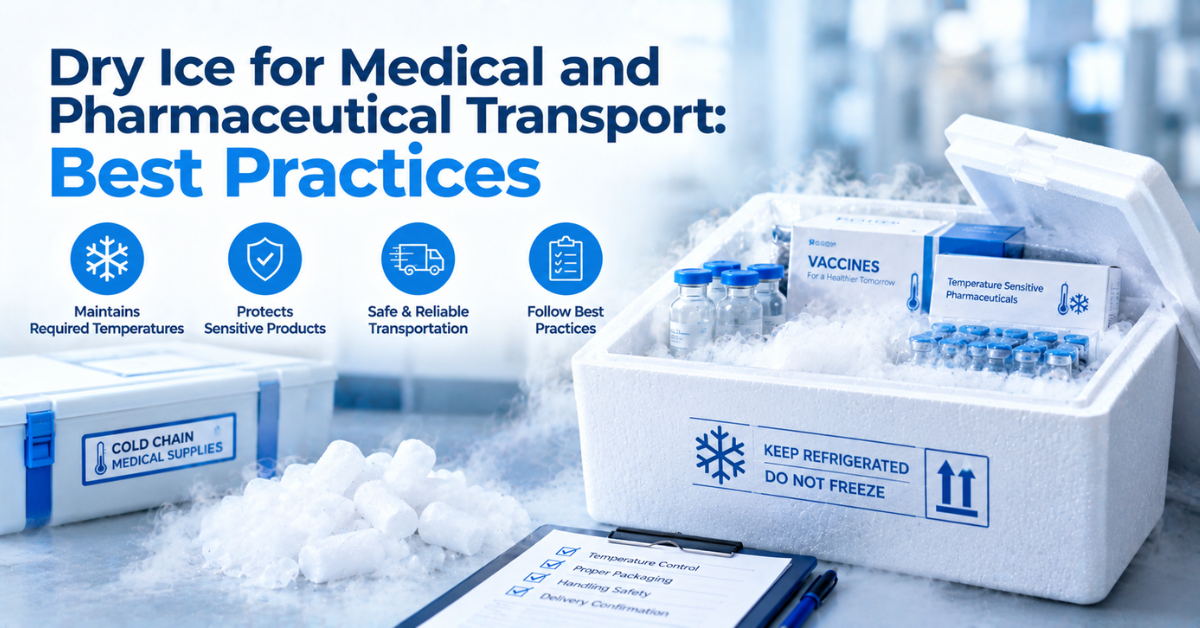
When a shipment contains vaccines, biological samples, or temperature-sensitive medicines, a temperature error is not just a commercial loss. It can compromise the safety and effectiveness of a product that patients depend on. In the UAE, a major regional hub for healthcare, pharmaceutical distribution, and clinical research, keeping these products within their required temperature range from origin to destination is one of the most important responsibilities in logistics.
Dry ice has long been a cornerstone of medical and pharmaceutical transport, especially for products that must remain frozen or ultra-cold. This guide sets out best practices for using dry ice for medical transport, covering packaging, quantities, monitoring, documentation, safety, and how to choose a supplier you can rely on.
Why Temperature Control Matters in Pharmaceutical Transport
Many pharmaceutical and biological products degrade when exposed to temperatures outside their approved range. Depending on the product, that range might be refrigerated, frozen, or ultra-cold. Some vaccines, biologics, cell therapies, and clinical samples require storage at very low temperatures, and even a short excursion can affect potency or make a product unusable.
For companies operating in the UAE, the challenge is compounded by extreme heat, long transit times through busy air freight hubs, and the growing volume of cross-border healthcare logistics. A reliable cold chain is a regulatory expectation and a patient safety issue.
Where Dry Ice Fits in the Medical Cold Chain
Pharmaceutical transport typically uses different cooling methods depending on the required temperature range. Understanding where dry ice fits helps avoid costly mistakes:
- Refrigerated range: usually managed with gel packs, phase change materials, or refrigerated systems. Dry ice is generally too cold and can cause freezing damage if used carelessly.
- Frozen range: dry ice is a common and effective option, especially for shipments in insulated containers without active refrigeration.
- Ultra-cold range: dry ice is one of the standard solutions for products that must be held at very low temperatures, including certain vaccines and cell-based products.
The critical point is to match the coolant to the product. Using dry ice for a product that must stay between refrigerated temperatures can be as damaging as letting it warm up.
Best Practice 1: Use Qualified, Validated Packaging
Professional pharmaceutical shipping relies on packaging that has been tested to perform under defined conditions. Validated insulated shippers are designed to hold a specific temperature range for a specific duration when packed according to instructions. Improvised packaging, or reusing damaged containers, introduces unnecessary risk.
Always follow the packing configuration provided for your shipper, including the amount and placement of dry ice, and ensure containers are inspected for cracks, gaps, or wear before every use.
Best Practice 2: Calculate Dry Ice Quantity With Real Transit Data
Under-packing dry ice is one of the most common reasons for temperature failures. Quantity should be based on the full expected journey, plus a realistic buffer for delays, not the best-case scenario. Consider all stages of the route: preparation, transport to the airport, cargo handling, transit, customs, and last-mile delivery.
Factors that influence the amount required include:
- Total expected transit time and buffer for delays
- Ambient temperatures along the route
- Insulation performance of the shipper
- The required product temperature and its tolerance
- Whether the product is pre-frozen or pre-conditioned before packing
Best Practice 3: Monitor Temperature Throughout the Journey
Trust, but verify. Temperature data loggers placed inside the shipment record the conditions the product experienced from packing to delivery. These records help confirm that the product stayed within range and provide evidence in case of a dispute or deviation. For high-value or highly sensitive shipments, real-time monitoring devices can alert teams to problems while the shipment is still in transit, giving them a chance to intervene.
Best Practice 4: Get Documentation and Labeling Right
Dry ice is classified as a dangerous good for air transport because of the CO2 gas it releases. Under international dangerous goods rules, it is identified as Class 9 under UN 1845. Packages generally need to be ventilated, properly marked with the dry ice identification and net weight, and accompanied by appropriate documentation.
Requirements vary between carriers and countries, so confirm the latest rules before every new route. Proper labeling and paperwork prevent delays at handover points, which is important because delays are exactly what put temperature-sensitive shipments at risk.
Best Practice 5: Train Everyone Who Touches the Shipment
A validated shipper can still fail if the people packing or handling it are not trained. Staff should know how to handle dry ice safely, how to pack according to the approved configuration, how to label shipments, and what to do in case of a delay or deviation.
- Use insulated gloves and eye protection when handling dry ice
- Pack only in well-ventilated areas
- Never seal containers airtight, and follow the packing instructions
- Do not transport dry ice in a sealed vehicle cabin, and ensure proper ventilation
- Have a clear escalation process if a shipment is delayed or damaged
Best Practice 6: Time Your Dry Ice Delivery Carefully
Dry ice sublimates continuously, so fresh product is essential. A shipment packed with partly sublimated dry ice starts its journey with less cooling capacity than planned. Coordinate your dry ice delivery so that it arrives shortly before packing, and avoid storing it for long periods. This is a simple step that many teams overlook, but it makes a real difference to shipment reliability.
Best Practice 7: Prepare a Contingency Plan
Even the best-planned shipments can be delayed. Good practice includes knowing in advance who will be contacted if a flight is missed, whether re-icing is possible along the route, and what backup supply arrangements are in place. Having a local supplier who can deliver dry ice quickly, including at short notice, is a valuable part of that plan.
Common Mistakes in Medical Dry Ice Shipping
- Using dry ice for products that must remain refrigerated rather than frozen
- Under-estimating transit time and packing too little dry ice
- Using non-validated or damaged packaging
- Ignoring temperature monitoring
- Incorrect labeling or missing documentation
- Relying on inconsistent suppliers with variable quality and delivery times
Choosing a Dry Ice Supplier for Medical and Pharma Transport
In pharmaceutical logistics, the supplier of your coolant is part of your quality chain. Look for a supplier that offers consistent quality, reliable and punctual delivery, appropriate packaging, and an understanding of how dry ice is used in regulated shipments. They should be able to respond quickly, including to urgent requests, and provide clear communication.
Ice Dry Ice supplies dry ice to businesses across Dubai and the UAE, and understands that for healthcare and pharmaceutical customers, reliability is not optional. Working with a supplier that takes delivery timing and product freshness seriously helps protect the integrity of your shipments from the very first step.
Handling Dry Ice Safely in Vehicles and Warehouses
The people transporting medical shipments deserve the same level of protection as the products they carry. Because CO2 gas can build up in enclosed spaces, delivery vehicles and small storage areas deserve special attention.
- Carry dry ice shipments in ventilated cargo areas, separated from the driver’s cabin where possible
- If a shipment must travel in the passenger area, keep windows partly open and limit the time on the road
- Avoid leaving dry ice in parked, closed vehicles or small storage rooms
- Give drivers and warehouse staff clear guidance on CO2 symptoms such as headache, dizziness, and shortness of breath
- Keep emergency contact details and procedures easily available in every vehicle
These simple measures protect people, and they also protect your business from accidents and disruption. A well-briefed team is one of the most valuable parts of any pharmaceutical cold chain.
Questions to Ask Before Every New Medical Shipping Route
Every route has its own risks, so it helps to review a short set of questions before the first shipment goes out. Doing this once for each new lane, and again whenever the route or carrier changes, catches most problems before they reach the product.
- What is the longest realistic transit time, including customs and weekends?
- Does the carrier accept dry ice on this route, and what are the quantity limits?
- Who receives the shipment, and is someone available to unpack it immediately on arrival?
- Is there a backup plan if the shipment is delayed or the dry ice runs low?
- Has the packaging been validated for the temperatures the route is likely to see?
Frequently Asked Questions
Is dry ice suitable for all pharmaceutical shipments?
No. It is best for frozen and ultra-cold products. Refrigerated products usually require other cooling methods, because dry ice can make them too cold.
How is dry ice regulated for air transport?
It is treated as a Class 9 dangerous good under UN 1845, with packaging, marking, and quantity requirements set by airlines and international regulations. Always check the current rules with your carrier.
Should I use a data logger with every shipment?
It is strongly recommended, particularly for high-value or regulated products. Data loggers provide proof of temperature conditions and help identify any problems.
Can dry ice be delivered at short notice?
This depends on the supplier. Choosing a local supplier with fast turnaround is important for urgent or unexpected shipments.
Final Thoughts
Dry ice is a powerful tool for keeping medical and pharmaceutical products at safe temperatures, but it only works as part of a well-planned system: the right coolant for the product, validated packaging, accurate quantities, monitoring, documentation, and trained staff.
With a dependable local partner such as Ice Dry Ice supporting your supply, you can build a more resilient cold chain for the products that matter most, in a climate that leaves very little room for error.