
Dry Ice vs Regular Ice: Key Differences You Need to Know

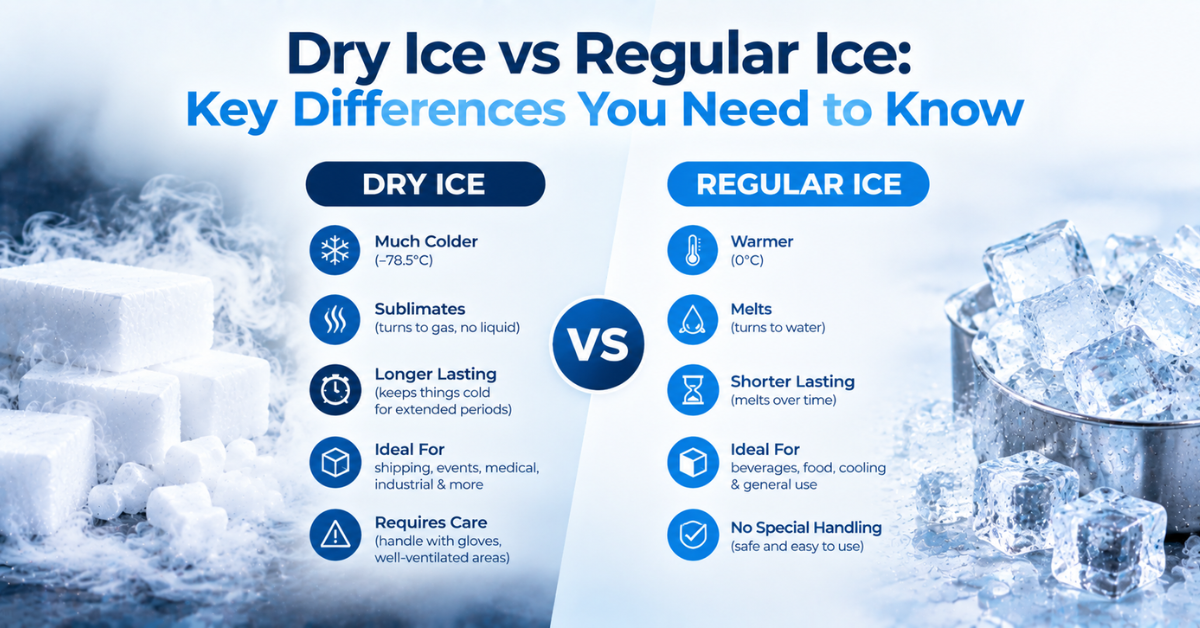
At first glance, dry ice and regular ice seem like they should be interchangeable. Both are cold, both are white, and both are used to keep things chilled. But in practice, they are completely different substances with different properties, different uses, and very different safety requirements. Choosing the wrong one can lead to spoiled food, damaged products, or even injury.
This guide explains the key differences between dry ice and regular ice, when to use each, and how to make the best choice for your business or event in the UAE, where reliable cooling is a daily necessity.
What Is Regular Ice?
Regular ice is simply frozen water. It forms at 0°C and melts back into liquid water as it warms. It is safe to handle, safe to consume when made from clean water, and familiar in everyday life, from cooling drinks to keeping fish fresh on display at the market.
What Is Dry Ice?
Dry ice is the solid form of carbon dioxide (CO2). It is extremely cold, with a surface temperature of about -78.5°C. It is called dry because it does not melt into a liquid. Instead, it sublimates, meaning it turns directly from a solid into gas, leaving no puddle or moisture behind.
Dry Ice vs Regular Ice: The Key Differences
1. Temperature
This is the biggest difference. Regular ice sits at around 0°C, while dry ice is about -78.5°C, far colder. That extreme temperature makes dry ice suitable for keeping things frozen, while regular ice is better for keeping items cool but not frozen solid.
2. Melting vs Sublimation
Regular ice melts into water, which can soak packaging, dilute drinks, and create hygiene problems. Dry ice sublimates into gas, so items stay dry. This makes dry ice especially useful for shipping and transporting goods that cannot get wet.
3. Cooling Power
Weight for weight, dry ice can absorb more heat than water ice, which means a smaller amount can keep products cold for longer. It is a major reason it is favored for long-distance shipping and hot-weather transport.
4. Residue and Cleanliness
Water ice leaves meltwater behind, while dry ice leaves nothing. For sensitive products, packaging, and paperwork, that dry, residue-free performance is a significant advantage.
5. Safety and Handling
Regular ice is safe to touch and consume. Dry ice is not. Contact with bare skin can cause severe cold burns, and swallowing it can cause serious internal injuries. Dry ice also releases CO2 gas, which can accumulate in enclosed spaces. It must be handled with insulated gloves, stored in ventilated containers, and never sealed in airtight ones.
6. Uses
Regular ice is ideal for drinks, food display, casual coolers, and short-term cooling. Dry ice is best for deep freezing, long-distance shipping, cold chain logistics, fog effects, and industrial cleaning.
7. Cost and Availability
Regular ice is cheap and widely available. Dry ice costs more per kilogram and needs to be sourced from a specialist supplier, but its stronger cooling power can make it more economical for certain uses. It also has to be bought fresh, since it sublimates over time and cannot be stored long-term like water ice.
Quick Comparison
- Temperature: regular ice about 0°C, dry ice about -78.5°C
- State change: regular ice melts into water, dry ice sublimates into gas
- Residue: regular ice leaves water, dry ice leaves none
- Safety: regular ice is safe to touch, dry ice requires gloves and ventilation
- Best for: regular ice suits drinks and short-term cooling, dry ice suits deep freezing and shipping
- Storage: regular ice keeps in a standard freezer, dry ice needs a ventilated insulated container
When Should You Use Regular Ice?
- Serving drinks and cocktails
- Displaying fresh fish, seafood, or produce
- Keeping beverages and snacks cool at a picnic or casual gathering
- Short trips where items only need to stay chilled, not frozen
- Situations where safety around children is a priority and extreme cold is unnecessary
When Should You Use Dry Ice?
- Shipping frozen food, seafood, meat, or pharmaceuticals over long distances
- Catering and events where items must remain frozen for hours
- Emergency backup when a freezer fails or power is lost
- Creating fog effects for weddings, parties, and productions
- Industrial cleaning through dry ice blasting
- Laboratory and research storage of temperature-sensitive samples
Can You Use Dry Ice and Regular Ice Together?
In some cooler setups, people layer dry ice below or beside regular ice. This can extend cooling time but it can also freeze items you meant to keep only chilled, and the rapid cooling can cause water ice to freeze harder. If you do combine them, keep them separated by a barrier, never put dry ice into drinks, and never seal the container.
Common Myths About Dry Ice
- Myth: dry ice is just very cold regular ice. Fact: it is solid carbon dioxide, a completely different substance.
- Myth: it is safe to put dry ice in drinks. Fact: dry ice must never be swallowed and should not be placed in drinks that will be consumed.
- Myth: dry ice can be stored in a normal freezer. Fact: it is colder than most freezers are designed for and can damage them.
- Myth: you can seal it in a container to keep it longer. Fact: sealed containers can build up dangerous pressure and burst.
Where to Buy Dry Ice in the UAE
Unlike regular ice, dry ice is not something you can grab from any shop. It needs to come from a supplier that produces or distributes it and understands how to package and deliver it safely. For businesses, food grade dry ice is essential for anything that involves food, while industrial grade can suit other uses such as cleaning.
Ice Dry Ice supplies dry ice across Dubai and the UAE for businesses, events, and individual customers, and can advise on which type and quantity suits your needs. Choosing a supplier who provides fresh product and practical guidance helps you avoid the most common mistakes, especially if you are using dry ice for the first time.
Which Is Better for Shipping Frozen Food?
For frozen food that has to travel any real distance, dry ice is usually the stronger choice. Regular ice cannot get below 0°C, which means it can only keep products cold, not truly frozen. As it melts, it also produces water that can leak, spoil packaging, and create hygiene problems. Dry ice holds much lower temperatures and leaves no liquid behind, which is why seafood exporters, meat suppliers, and online frozen food sellers in the UAE rely on it.
For items that only need to stay chilled, such as some dairy products or fresh produce, regular ice or gel packs may be more suitable, because dry ice could freeze and damage them. The right choice depends on the required temperature of the product, and not on which coolant seems stronger.
Which Is Better for Events and Parties?
It depends on the purpose. For keeping drinks cold and serving guests, regular ice is the natural choice, since it is safe to handle and to consume. For special effects such as rolling fog at weddings and launches, dry ice is what creates the look, but it must be handled by trained staff and kept away from guests and drinks.
Many events use both: regular ice for the bar and dry ice for the fog effect, each stored and managed separately. Treating them as two different tools, with two different sets of rules, is the safest way to get the best of both.
Cost Comparison in Real Terms
Regular ice is cheaper per kilogram, but that is not the whole picture. If you need to keep something frozen over a long journey, the amount of regular ice required, plus the weight and the mess of meltwater, can outweigh its lower price. Dry ice may cost more per kilogram, but a smaller quantity can do a stronger job, and it protects your product from water damage. The true cost is the cost of the result you need, so compare the two by the outcome, not simply the price tag.
Frequently Asked Questions
Which is colder, dry ice or regular ice?
Dry ice is far colder, at about -78.5°C compared with 0°C for regular ice.
Does dry ice last longer than regular ice?
Usually yes, for keeping things frozen. It offers stronger cooling and does not leave meltwater, though it sublimates continuously, so it should be used soon after purchase.
Is dry ice dangerous?
It is safe when handled properly, but it can cause cold burns and releases CO2. Use gloves, keep it ventilated, and never ingest it.
Can I use dry ice instead of regular ice for drinks?
No. Dry ice should never be put in drinks that will be consumed, since it can cause serious injury if swallowed.
Final Thoughts
Dry ice and regular ice may look similar, but they serve very different purposes. Regular ice is the right choice for everyday cooling and serving, while dry ice is the better solution for deep freezing, long-distance transport, and specialist uses. Knowing the difference helps you protect your products, your budget, and your team.
If you are unsure which is right for your situation, a knowledgeable local supplier like Ice Dry Ice can help you choose the correct option and quantity so that you get the result you need, safely.