
Why Liquid Nitrogen Is the Secret to Creamy Acai Ice Cream

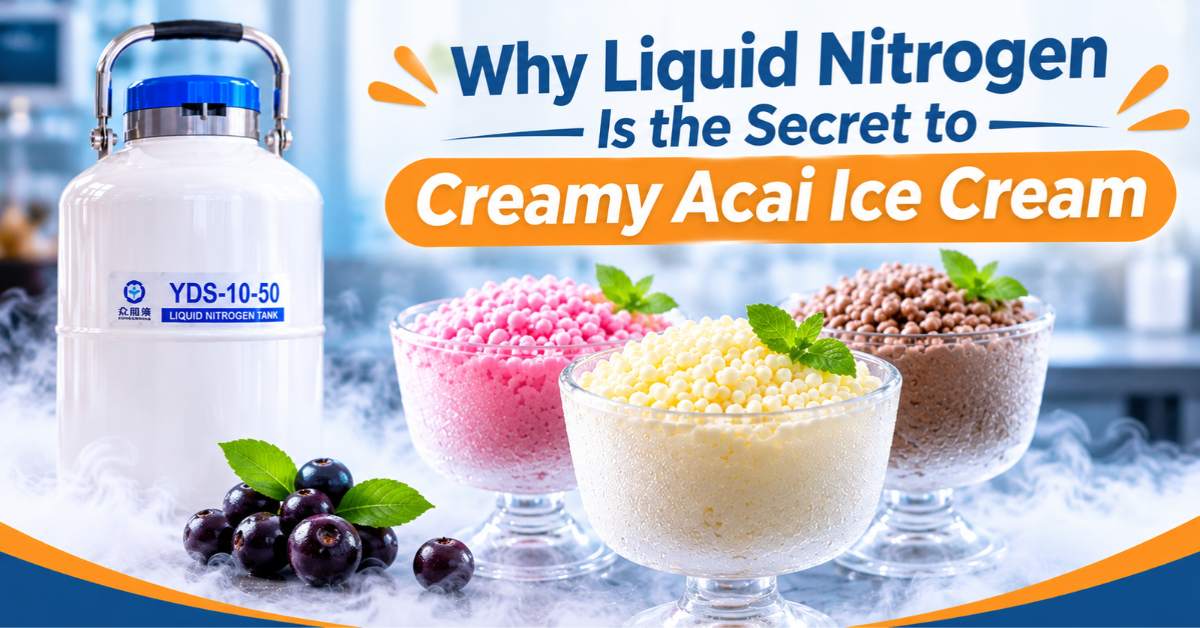
Acai has become one of the most popular flavours in the UAE. From health-focused cafes in Dubai Marina and JLT to beachside kiosks and weekend markets, the deep purple bowl topped with granola, banana and berries is now a familiar sight. But anyone who has tried to make acai ice cream at home, or ordered a bowl that turned out icy and crunchy, knows that texture is the hard part.
That is where liquid nitrogen comes in. It is the secret behind acai desserts that are smooth, thick and scoopable, with a flavour that tastes fresh rather than muted. In this guide, Ice Dry Ice in Dubai explains why liquid nitrogen works so well with acai, how the process works, what makes the result creamier, and how to serve it safely at a cafe or event.
What Is Acai and Why Is It Popular?
Acai (pronounced ah-sigh-EE) is a small, dark purple berry that grows on palm trees in the Amazon region of Brazil. It is rarely eaten fresh outside its growing area because it spoils quickly, so it is usually sold as a frozen pulp or puree, or as a powder.
The flavour is distinctive: earthy, slightly bitter, with notes of dark berries and a hint of chocolate. On its own it is not very sweet, which is why it is usually blended with fruit such as banana, mango or strawberry, and with ingredients like coconut milk, yoghurt or honey.
Acai is popular for several reasons.
- It looks stunning. The deep purple colour makes desserts instantly eye-catching and photogenic.
- It fits the wellness trend. Acai is often associated with antioxidants and plant-based eating, and many customers see it as a lighter alternative to traditional ice cream.
- It is versatile. It works as a bowl, a smoothie, a sorbet or an ice cream.
- It suits warm climates. In a hot country like the UAE, cold, fruity desserts are a year-round favourite.
The Problem With Traditional Acai Ice Cream
Acai pulp is mostly water, with some fibre, natural pigments and a small amount of fat. When it is frozen slowly in a conventional freezer or churned in a standard machine, water forms large ice crystals. The result is a dessert that can feel icy, grainy or hard, and that melts into a watery puddle.
Three common problems appear.
Iciness. Large ice crystals make the dessert feel crunchy rather than creamy.
Hardness. A dessert frozen solid in a freezer is difficult to scoop and needs to sit out before serving, which can dull its taste.
Muted flavour. Very cold, dense, icy desserts can numb the palate, so subtle flavours like acai and berry notes are harder to taste.
Many cafes solve this by adding more sugar, stabilisers or large amounts of banana and other fruit to improve texture. These can work, but they also change the flavour and nutrition of the dessert. Liquid nitrogen offers a different solution.
How Liquid Nitrogen Changes the Texture
Liquid nitrogen is nitrogen cooled to roughly minus 196 degrees Celsius. When it is poured into an acai base while the mixture is stirred, it removes heat almost instantly and freezes the mixture within a couple of minutes.
The benefit comes down to ice crystal size. When water freezes slowly, molecules have time to join together and form large crystals. When freezing is extremely rapid, there is little time for crystals to grow, so the dessert is made up of millions of tiny crystals. The tongue cannot detect crystals that small, so the dessert feels smooth and creamy.
For acai, which has a high water content, this effect is especially noticeable. Rapid freezing locks the pulp into a soft, silky structure that feels far richer than the ingredients suggest.
The Benefits of Liquid Nitrogen Acai Ice Cream
1. Exceptional creaminess. Fine ice crystals deliver a dense, velvety texture that is hard to achieve with slow freezing, even without adding large amounts of fat or stabilisers.
2. Brighter flavour. Because the dessert is served fresh and slightly less hard than freezer ice cream, the natural fruit flavours come through more clearly. Acai’s berry and cocoa notes taste more vivid.
3. Fresh colour. The deep purple stays vibrant when the dessert is made and served immediately. Long storage can dull colour and cause surface ice.
4. Simple, clean recipes. Because the texture comes from the freezing method rather than heavy additives, cafes can keep ingredient lists shorter. Many operators build a base from acai pulp, banana or other fruit, a creamy element and a touch of natural sweetener.
5. Made-to-order freshness. Each portion is frozen on demand, so there is no freezer burn and no waiting for a batch to set.
6. Easy customisation. Guests can choose their own flavour combinations, such as acai with mango, acai with strawberry and coconut, acai with peanut butter, or acai with dates and tahini. Dairy-free, vegan and lower-sugar versions are simple to prepare.
7. Spectacular presentation. The clouds of vapour and the purple colour create an unforgettable visual, which is ideal for cafes, brand activations and social media content.
8. Fast service. A trained operator can prepare a portion in a few minutes, making it practical for events with queues.
Step-by-Step: How Liquid Nitrogen Acai Ice Cream Is Made
The exact method varies from one operator to another, but the typical process looks like this.
- Prepare the base. Acai puree is blended with other ingredients that add creaminess and sweetness. Common choices include banana, coconut milk, almond or oat milk, Greek or plant-based yoghurt, dates, honey or agave. The base is kept chilled until needed.
- Taste and adjust. Acai is naturally earthy and a little bitter, so the sweetness and fruitiness are balanced before freezing. Because freezing dulls sweetness slightly, the base is usually seasoned a touch more than you might expect.
- Set up the workstation. A stable surface, a mixing bowl, a mixer or spatula and an insulated container of food-grade liquid nitrogen are arranged. The operator puts on cryogenic gloves and eye or face protection.
- Start mixing. The base is placed in the bowl and mixing begins, either by hand or with a stand mixer.
- Add liquid nitrogen gradually. A thin stream of liquid nitrogen is poured in while mixing continues. The mixture thickens quickly, and white vapour rolls over the edge of the bowl.
- Mix continuously. Constant movement prevents frozen lumps and keeps freezing even.
- Check the texture. When the ice cream looks thick, glossy and scoopable, pouring stops. Acai ice cream is often served at a soft-serve to firm-scoop consistency.
- Let all nitrogen evaporate. Before serving, the operator makes sure no liquid nitrogen remains in the bowl.
- Serve and top. The ice cream is scooped into bowls or cones and topped with granola, fresh fruit, coconut flakes, nuts, seeds, honey or chocolate.
Tips for the Creamiest Acai Ice Cream
Even with liquid nitrogen, ingredients and technique matter. Here are tips that help achieve the best texture.
- Balance water and fat. Acai pulp is watery, so adding creamy ingredients such as banana, coconut cream, avocado, yoghurt or nut butter improves richness.
- Use ripe fruit. Ripe banana or mango adds natural sweetness and body.
- Keep the base cold. A chilled base freezes faster and uses less nitrogen.
- Pour slowly. Adding nitrogen too fast can create hard lumps or flaky ice. Slow, steady pouring produces smoother results.
- Mix throughout. Constant mixing keeps the texture even and incorporates a little air.
- Do not over-freeze. If the mixture becomes crumbly or hard, it has been frozen too far. Stop at a creamy, thick texture.
- Serve immediately. Fresh nitrogen ice cream is at its best right after making.
- Season confidently. Cold dulls flavour, so a slightly bolder base tastes balanced once frozen.
Flavour Combinations to Try
Acai works well with many ingredients, and liquid nitrogen makes experimentation easy. Popular combinations include:
- Classic acai bowl style: acai, banana and a splash of coconut milk, topped with granola and berries.
- Tropical acai: acai with mango and pineapple, topped with toasted coconut.
- Peanut butter acai: acai with banana and peanut or almond butter, topped with cacao nibs.
- Date and tahini acai: a nod to regional flavours, using dates and tahini for natural sweetness and richness.
- Berry blast: acai with strawberries and blueberries for a bright, fruity finish.
- Chocolate acai: acai with cocoa and a creamy base for a dessert-style treat.
- Pistachio and rose acai: a luxurious option inspired by Middle Eastern desserts.
For events, a short menu of two to four flavours with a selection of toppings gives guests choice without slowing service.
Is It Healthy?
Acai is often marketed as a wellness food, and it does contain natural plant compounds, fibre and some healthy fats. However, a dessert is only as healthy as its ingredients. A bowl loaded with sugary syrups and sweetened toppings is still a treat, while a simple base of acai, fruit and a creamy plant-based element can be a lighter option.
The liquid nitrogen itself does not add calories or nutrition, because it evaporates during preparation. Because the texture comes from rapid freezing, cafes can often reduce reliance on heavy cream, sugar or stabilisers. If you are making health claims on a menu, make sure they are accurate and follow local food labelling rules.
Safety: What Every Operator and Host Should Know
Liquid nitrogen is safe to use in food preparation when handled by trained people with the right equipment. It is dangerous when mishandled. Follow these principles.
- Never serve a dessert that still contains liquid nitrogen. Swallowing it can cause serious injury.
- Wear protective equipment. Cryogenic gloves and eye or face protection are essential, since contact can cause severe cold burns.
- Use proper containers. Liquid nitrogen must be stored in insulated vessels designed for cryogenic liquids and never in sealed, airtight containers, since evaporating gas builds pressure.
- Ventilate the area. Nitrogen gas displaces oxygen, so use it in well-ventilated spaces, and avoid large-scale use in small closed rooms.
- Keep guests at a distance. Operators should handle all liquid nitrogen and serve the finished dessert. Children should never handle it.
- Transport carefully. Do not carry liquid nitrogen inside a closed car cabin.
- Check rules. Venues, hotels, malls and food service licences in the UAE may have requirements covering cryogenic liquids and live food preparation. Confirm these in advance.
Because of these risks, liquid nitrogen acai ice cream is best left to trained professionals, rather than a home experiment.
Where Liquid Nitrogen Acai Ice Cream Works Best in the UAE
- Health cafes and juice bars. A made-to-order acai ice cream gives a premium option beyond standard bowls.
- Gyms, wellness studios and fitness events. It fits the wellness audience and draws attention.
- Weddings and private parties. A live dessert station adds theatre and a modern touch.
- Corporate events and brand activations. The vibrant purple and the vapour create strong visuals and photo moments.
- Markets, festivals and pop-ups. The show attracts crowds and builds buzz.
- Hotels and restaurants. Tableside nitrogen desserts add a memorable finale to a menu.
In summer, when outdoor temperatures climb, a freshly frozen acai dessert is especially welcome, and the smooth texture holds up better than icy alternatives.
Pairing With Dry Ice for Transport and Presentation
While liquid nitrogen is used to make the ice cream itself, dry ice can play a helpful supporting role at events and cafes. Dry ice, which is solid carbon dioxide at about minus 78.5 degrees Celsius, is widely used to keep frozen items cold during transport and storage, and to create gentle fog effects for displays.
For example, a dessert event might use dry ice in insulated boxes to keep toppings and frozen fruit cold on the way to the venue, and a dry ice bowl or cauldron beside the station for atmospheric fog. Dry ice must always be handled with insulated gloves or tongs, kept in well-ventilated, non-airtight containers and kept away from food and drinks that guests will consume.
Ice Dry Ice supplies dry ice across Dubai and the UAE and can advise on quantities and safe handling for catering, cold-chain and event needs. If you are curious about fog effects for themed dessert tables, our guides on fog machine vs dry ice and low-lying graveyard fog explain the options.
Common Mistakes to Avoid
Using a watery base. Without enough creaminess, even nitrogen ice cream can feel thin. Add banana, coconut or yoghurt.
Adding nitrogen too quickly. This can create hard chunks or a flaky texture.
Over-freezing. Stop when the texture is creamy and scoopable.
Ignoring sweetness. Frozen desserts taste less sweet, so adjust the base accordingly.
Poor ventilation. Nitrogen gas must have room to disperse safely.
Skipping training. Safe handling is not optional. Make sure all staff are trained.
Storing for too long. Nitrogen ice cream is best fresh. If stored, ice crystals will grow and texture will change.
Frequently Asked Questions
Why is liquid nitrogen acai ice cream creamier?
Because rapid freezing forms very small ice crystals, which the tongue perceives as smooth rather than icy.
Does it taste different from a regular acai bowl?
Yes. The texture is smoother and thicker, and flavours often taste fresher and more vibrant.
Is it vegan?
It can be. Use acai, fruit and plant-based milks or creams, and check toppings for dairy or honey.
Can I make it at home?
It is not recommended without proper training and equipment, because liquid nitrogen requires careful handling.
How long does it take to make?
Usually just a few minutes per portion, depending on batch size and technique.
Can I use dry ice instead of liquid nitrogen in the ice cream?
Dry ice is not a substitute for liquid nitrogen in making ice cream, and it should not be mixed into food without proper food-safety guidance. It is better used for keeping ingredients cold and for fog effects.
Final Thoughts
Acai is already a favourite in the UAE, but texture is what turns a good acai dessert into a great one. Liquid nitrogen delivers that texture: tiny ice crystals, silky creaminess, vivid flavour and a show that guests love to watch. With the right ingredients, a trained operator and careful safety practices, it can elevate a menu, an event or a brand experience.
If you are planning a dessert station, a cafe launch or a wellness event in Dubai or elsewhere in the UAE, the Ice Dry Ice team can help with dry ice for cold storage, transport and fog effects, and advise on safe, impressive cold setups. Get in touch with your plans and we will help you create something smooth, striking and unforgettable.