
Liquid Nitrogen for Ice Cream: Benefits, Process, and How It Works

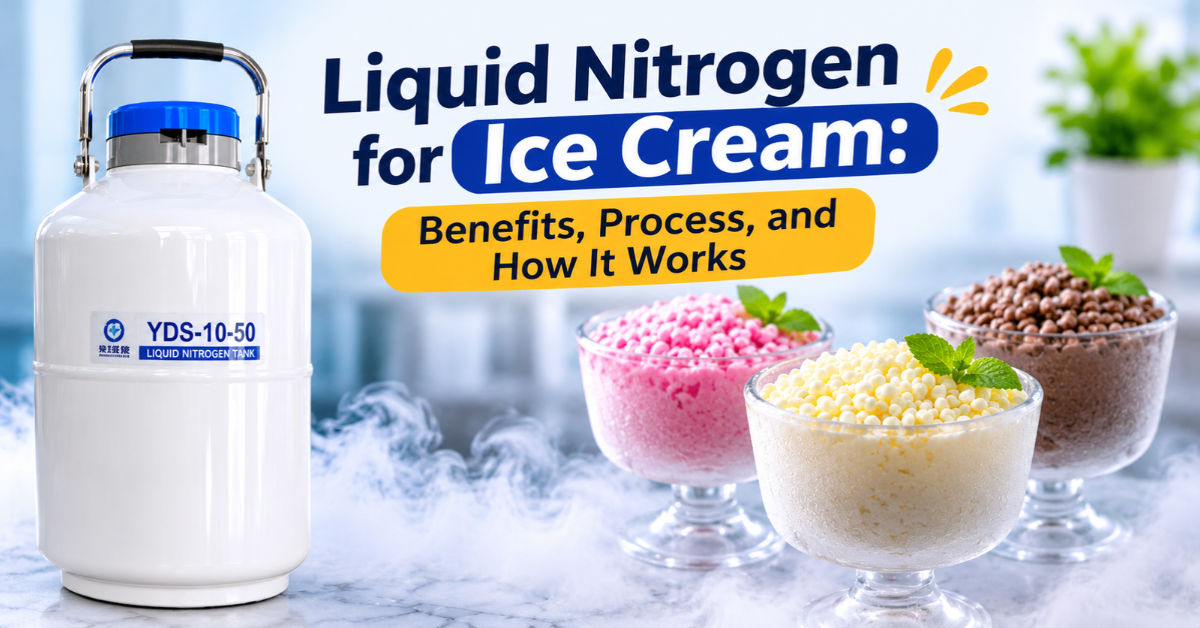
There is a moment in every liquid nitrogen ice cream demonstration when the crowd goes quiet. A chef pours a thin stream of super-cold liquid into a bowl, a thick cloud of white vapour rolls over the edges, and within a minute or two a creamy, perfectly frozen dessert appears. It is part science experiment, part theatre and part dessert, and it is one of the most popular attractions at weddings, brand events, cafes and family gatherings across the UAE.
But beyond the show, is liquid nitrogen ice cream actually better? How does it work, and is it safe? In this guide, we explain the science, the benefits, the step-by-step process and the safety rules, so you can decide whether it is right for your next event or venue.
What Is Liquid Nitrogen?
Nitrogen makes up about 78 per cent of the air we breathe. When it is cooled to roughly minus 196 degrees Celsius, it becomes a clear, colourless liquid. That is far colder than a home freezer, which sits around minus 18 degrees, and much colder than dry ice, which is around minus 78.5 degrees.
At normal room temperature, liquid nitrogen boils immediately, turning back into nitrogen gas. This boiling is what creates the dramatic white clouds you see. Those clouds are not nitrogen itself, which is invisible, but water vapour in the surrounding air that condenses into tiny droplets when it meets the extremely cold gas.
For food use, only food-grade liquid nitrogen should be used, supplied and handled by people who understand cryogenic safety.
How Liquid Nitrogen Makes Ice Cream
Traditional ice cream is made by chilling a mixture of milk, cream, sugar and flavouring while churning it. The churning adds air and breaks up ice crystals as they form, while the mixture slowly freezes over 20 to 40 minutes or more.
Liquid nitrogen changes the method. When it is added to the ice cream base while mixing, it absorbs heat from the mixture very rapidly and freezes it in a matter of minutes, often in around one to three minutes for a small batch. The nitrogen itself evaporates in the process and leaves the room as gas, so none of it remains in the finished dessert when it is made correctly.
The key is speed. The faster ice cream freezes, the smaller the ice crystals that form, and small crystals are what make ice cream feel smooth rather than icy.
The Benefits of Liquid Nitrogen Ice Cream
Why do cafes, event planners and dessert lovers choose this method? Here are the main benefits.
1. A remarkably smooth, creamy texture. Rapid freezing creates very small ice crystals, which the tongue perceives as smoothness. Many people notice that liquid nitrogen ice cream feels richer and silkier than a standard scoop, even when the ingredients are the same.
2. Freshness. Each portion is made to order, so the ice cream is served immediately after freezing. There is no long storage, no freezer burn and no flavour loss.
3. Customisation. Because each batch is small, guests can choose their flavour, toppings and sometimes even their dietary base. Vanilla, chocolate, pistachio, Arabic coffee, rose, saffron, mango and salted caramel are all possible, as are dairy-free options using plant-based milks.
4. Fewer additives. Traditional commercial ice cream often relies on stabilisers and emulsifiers to hold texture in storage and transport. Because liquid nitrogen ice cream is served almost instantly, recipes can be simpler, although this depends on the recipe and the provider.
5. Entertainment value. The billowing vapour, the instant freezing and the live preparation make the dessert an experience. Guests watch, film and share, which makes it a favourite for weddings, brand activations, birthday parties and corporate events.
6. Speed and flexibility. A skilled operator can serve many portions in a short time, and the setup does not need a large machine or a long freezing period.
7. Creative presentation. Nitrogen-frozen desserts can be combined with fog effects, themed bowls, cones and toppings for striking photos.
The Step-by-Step Process
The exact method varies between operators, but the basic process looks like this.
- Prepare the base. The base is typically a mixture of cream, milk, sugar and flavouring. It is kept chilled until needed. Some operators use a base with higher fat content for creaminess.
- Set up the workstation. A stable surface, a mixing bowl, a mixer or spatula, and a safe, insulated container of liquid nitrogen are arranged. Protective equipment such as cryogenic gloves and eye protection is put on.
- Add flavour and mix-ins. Fruit purees, chocolate, extracts or syrups are added to the base in the bowl.
- Pour the liquid nitrogen slowly. While the mixture is stirred or mixed, liquid nitrogen is poured in a controlled stream. The mixture thickens quickly, and vapour pours off the bowl.
- Mix continuously. Constant stirring ensures even freezing and prevents lumps or frozen blocks.
- Check texture. When the ice cream reaches a soft-serve or scoopable texture, pouring stops.
- Let the nitrogen fully evaporate. Before serving, the operator makes sure that no liquid nitrogen remains in the bowl. This step is vital for safety.
- Serve. The ice cream is scooped into cups or cones and topped with sauces, crumbs, fruit or other toppings.
A trained operator can produce a portion in just a few minutes.
How It Compares to Traditional Ice Cream Making
- Freezing time: Minutes with liquid nitrogen, versus 20 to 40 minutes or more with a churn.
- Texture: Very small ice crystals and a smooth feel, versus a texture that depends on the machine and recipe.
- Batch size: Small, made-to-order batches, versus larger batches made in advance.
- Equipment: Liquid nitrogen needs specialised storage and handling, whereas churns need electricity and a freezer.
- Experience: Live theatre and visual impact, versus a quieter, more familiar process.
- Cost: Liquid nitrogen is often priced as a premium experience, though it can also be cost-effective for events.
Neither method is automatically better. Traditional ice cream is excellent for high-volume everyday production, while liquid nitrogen shines for fresh, personalised and entertaining service.
The Science Behind the Smoothness
Ice cream is a complex mixture of ice crystals, fat globules, sugar, water and air. Its texture depends largely on the size of the ice crystals. Large crystals feel gritty or icy, and small crystals feel smooth.
When a mixture freezes slowly, water molecules have time to find each other and form larger crystals. When freezing is extremely rapid, as with liquid nitrogen, there is less time for crystals to grow, so many tiny crystals form instead. This is why liquid nitrogen ice cream can feel so silky.
Air content also matters. Traditional churning adds air, known in the industry as overrun, which makes ice cream lighter. Liquid nitrogen ice cream is mixed differently and can be denser or lighter depending on technique, so the texture varies between operators. A good operator adjusts mixing and nitrogen flow to achieve the style they want.
Is Liquid Nitrogen Ice Cream Safe?
When made by trained professionals who follow correct procedures, liquid nitrogen ice cream is widely served and enjoyed. The risks come from poor handling, not from the dessert itself. Here are the key safety principles.
Never serve ice cream that still contains liquid nitrogen. Any liquid nitrogen must be completely evaporated before the dessert is served. Swallowing liquid nitrogen can cause serious internal injury.
Use proper protective equipment. Operators should wear cryogenic gloves and eye or face protection. Liquid nitrogen can cause severe cold burns on contact with skin and eyes.
Use suitable containers. Liquid nitrogen should be stored and transported in containers designed for cryogenic liquids, such as insulated flasks with proper venting. It must never be sealed in an airtight container, since evaporating gas creates pressure that can cause a container to burst.
Ensure ventilation. Nitrogen gas displaces oxygen. In a small, enclosed room, large amounts of evaporating nitrogen can reduce oxygen levels, which is dangerous. Good ventilation is essential, and large-scale use in small closed spaces should be avoided.
Keep guests at a safe distance. Guests, and especially children, should not touch or handle liquid nitrogen. Operators should serve the finished dessert rather than allowing self-service.
Do not transport liquid nitrogen in a closed car cabin. Boiling gas in a sealed vehicle can create a dangerous atmosphere.
Avoid the novelty trap. Some trends involve serving food or drinks with visible liquid nitrogen, or letting guests eat items that are still releasing vapour. These can be dangerous and should be avoided.
Because of these risks, liquid nitrogen ice cream is not recommended as a casual home experiment unless you have proper training and equipment. For commercial or event use, always work with experienced operators.
Where Liquid Nitrogen Ice Cream Works Best in the UAE
In Dubai and across the UAE, liquid nitrogen ice cream suits a wide range of settings.
- Weddings and engagement parties. A live dessert station gives guests something to enjoy and photograph.
- Corporate events and brand activations. The visual effect draws crowds, and branded flavours or toppings reinforce a message.
- Birthday parties and family gatherings. Children and adults alike are fascinated by the process, with operators handling the cryogenic part safely.
- Cafes and dessert shops. Made-to-order nitrogen ice cream can become a signature menu item and a talking point on social media.
- Malls, festivals and pop-ups. The theatre of the process attracts passers-by and builds buzz.
- Hotels and restaurants. Chefs use it for tableside desserts or tasting menus.
The UAE’s warm climate also makes ice cream a year-round favourite, while the cold, smooth, freshly made quality of nitrogen ice cream feels especially refreshing in summer.
Tips for Planning a Liquid Nitrogen Ice Cream Station
If you are thinking about adding this experience to an event, keep the following points in mind.
- Hire trained operators. Experience and safety training matter more than anything else.
- Check venue rules. Hotels, malls and event halls may have policies on cryogenic liquids and dry ice. Ask early.
- Plan the space. You will need a stable table, good ventilation, safe distance for guests and access to power if mixers are used.
- Estimate guest numbers. Production speed is limited by the operator, so for large crowds you may need more than one station.
- Choose flavours wisely. A short menu of well-chosen flavours often works better than a long one. Offer dairy-free or allergy-friendly options where possible.
- Think about allergens. Clearly label nuts, dairy, gluten and other common allergens.
- Coordinate with food safety rules. Food service at events in the UAE is subject to local food safety regulations. Make sure your provider is properly licensed and compliant.
- Add atmosphere. Pair the station with lighting, themed signage and, if appropriate, a gentle fog effect nearby.
- Plan supply. Liquid nitrogen evaporates steadily, so quantities and delivery times need careful planning.
Common Myths About Liquid Nitrogen Ice Cream
Myth: It is unhealthy because of the nitrogen. When made correctly, the nitrogen evaporates and leaves the ice cream. Nutritionally, the dessert is as healthy or unhealthy as the ingredients used.
Myth: It is always cheaper. It can be cost-effective at events, but specialised equipment, trained staff and supply all affect cost.
Myth: It is just a gimmick. The show is part of the appeal, but the texture and freshness benefits are real.
Myth: You can safely make it at home with any container. It requires specialised storage, protective equipment and training. Casual home experiments can be dangerous.
Myth: Dry ice and liquid nitrogen are the same. They are different substances with different temperatures, uses and safety rules.
Frequently Asked Questions
Does liquid nitrogen ice cream taste different?
The flavour comes from the ingredients, but the texture is usually smoother and creamier, and freshness makes flavours seem brighter.
Is it safe for children?
Children can enjoy the finished dessert when it has been prepared correctly by a trained operator, but they should be kept away from liquid nitrogen itself.
How long does it take to make?
A single portion often takes just a few minutes, although exact times depend on batch size and technique.
Can it be made dairy-free?
Yes. Plant-based milks and creams such as coconut, oat or almond can be used, with different textures depending on fat content.
Can I store liquid nitrogen ice cream?
It is best eaten immediately. It can be stored in a freezer, but the texture may change over time as ice crystals grow.
Can I combine it with fog effects?
Yes, but keep fog machines and dry ice away from food preparation areas, and make sure ventilation is good.
Final Thoughts
Liquid nitrogen ice cream blends science, craft and showmanship. It freezes in minutes, creates a very smooth texture, allows endless customisation and gives guests a dessert they will remember. But it also demands respect: proper equipment, trained operators, good ventilation and careful handling are non-negotiable.
If you are planning a dessert experience, a themed party or a brand event in Dubai or elsewhere in the UAE, the Ice Dry Ice team can talk you through cold solutions, from dry ice for transport and fog effects to advice on safe, spectacular setups. Reach out with your event details and we will help you plan something cool, in every sense of the word.