
Ordering Ice Cubes for Events: A Planner’s Checklist

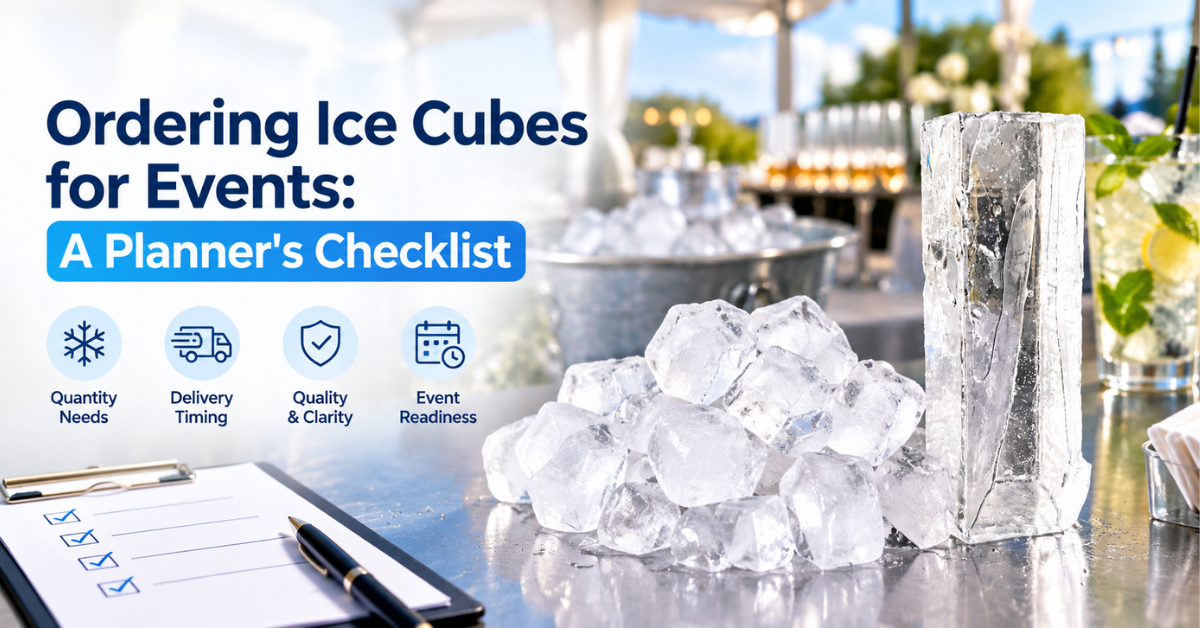
Whether you’re organizing a wedding, corporate function, outdoor festival, or private party in the UAE, ice is one of those details that’s easy to underestimate — until it runs out. Ordering ice cubes for events requires more planning than most people expect, since the right quantity, delivery timing, and storage setup can make the difference between a smoothly run bar service and a last-minute scramble. This checklist walks event planners and hosts through everything needed to get ice right, every time.
Step 1: Calculate How Much Ice You Actually Need
Ice consumption at events depends heavily on guest count, event duration, weather, and the type of beverage service offered. As a general planning guide:
- Allow approximately 0.5 to 1 kg of ice per guest for a standard beverage-focused event lasting 3–4 hours
- Increase this to 1.5 kg or more per guest for outdoor events in UAE’s hot climate, or events running longer than 5 hours
- Add extra ice if you’re also using it for food display, drink stations, or cooling beverage tubs rather than individual glasses
- Always build in a 15–20% buffer above your calculated estimate to account for spillage, melting, and unexpected guest turnout
For large weddings or festivals, it’s worth consulting directly with your ice supplier, who can often provide more precise estimates based on similar past events.
Step 2: Decide on Ice Format
Not all ice is suited to every part of an event. Consider:
- Standard cube ice for individual drinks served at a bar or by waitstaff
- Larger block ice for cooling drink tubs, coolers, or large beverage dispensers over several hours
- Crushed or nugget ice for blended cocktails, mocktails, or dessert stations
- Clear, premium-grade cubes if you want an elevated visual presentation for a high-end event or signature cocktail menu
Step 3: Confirm Delivery Timing
Ice should ideally arrive as close to the event start time as possible to minimize melting, but early enough to allow setup time. For most events, this means scheduling delivery 2–4 hours before guests arrive, depending on how the ice will be stored on-site. If your event runs across an entire day or into the evening, ask your supplier about staggered deliveries — an initial batch for setup and a second batch timed for peak usage later in the event.
Step 4: Plan Your On-Site Storage
Even the best ice will melt quickly without proper storage at the venue. Before your event, confirm:
- Whether the venue has walk-in freezer or cold storage space available for large ice deliveries
- Whether you’ll need insulated coolers or bins on-site to keep ice cold at bar stations throughout the event
- That ice storage areas are shaded and away from direct sunlight or heat sources, especially for outdoor events
- That you have enough bins distributed across multiple bar or drink stations to avoid repeated trips back to a single storage point
Step 5: Choose a Reliable Supplier
When selecting a supplier for event ice cubes, prioritize those who have experience specifically with event-based delivery, not just regular commercial accounts. Look for:
- Flexibility with delivery timing, including early morning, evening, or weekend slots common for events
- The ability to handle large one-time orders in addition to regular commercial contracts
- Backup supply arrangements in case of unexpectedly high demand during the event
- Clear packaging that’s easy to transport and distribute across multiple stations
- A responsive contact person on event day in case you need an emergency top-up
Step 6: Factor in Weather and Seasonality
In the UAE, outdoor events held during the warmer months require significantly more ice than indoor, climate-controlled venues. If your event is outdoors or during peak summer heat, increase your ice order, request more frequent top-up deliveries, and ensure shaded, insulated storage is available throughout the event. Even indoor events with poor air conditioning or large guest counts can see faster-than-expected ice melt, so it’s wise to slightly over-order rather than risk running short.
Step 7: Assign Someone to Manage Ice On the Day
For larger events, it helps to designate one person — whether event staff, a bartender lead, or a venue coordinator — to monitor ice levels throughout the event and coordinate any top-up deliveries. This person should know the supplier’s contact details, have a clear view of how much ice remains at each station, and be empowered to place a reorder without needing to track down the main event planner mid-event.
Common Mistakes When Ordering Ice Cubes for Events
Even experienced planners can run into avoidable ice-related issues. The most common mistakes include underestimating consumption for outdoor or long-duration events, ordering ice too far in advance without adequate storage, failing to confirm delivery access at the venue (loading docks, parking restrictions, lift access for upper floors), and not accounting for the extra ice needed for food and drink displays separate from individual servings.
Checklist Summary: Ordering Ice Cubes for Your Event
- Calculate total ice needed based on guest count, duration, and weather conditions, with a 15–20% buffer
- Decide on the right mix of cube, block, and crushed ice for your specific drink and food service needs
- Confirm delivery timing that balances freshness with enough setup time before guests arrive
- Arrange adequate on-site storage, including shaded space and insulated bins at every service station
- Select a supplier experienced with event logistics and flexible, event-specific delivery windows
- Assign a dedicated point person to monitor ice levels and handle any reorders during the event
- Confirm venue access details with your supplier in advance to avoid delivery delays on the day
Working With Venues That Have In-House Ice Supply
Some hotels and event venues offer in-house ice as part of their catering package. Even in these cases, it’s worth confirming exactly how much ice is included, whether it covers your full guest count and event duration, and what the process is for ordering additional ice if needed. Planners who assume ‘the venue will handle it’ without confirming specifics sometimes find themselves short during the event, so it’s always worth clarifying these details in writing during the initial venue contract discussions rather than leaving it to assumption.
Budgeting Ice Into Your Overall Event Costs
Ice is often treated as an afterthought in event budgets, bundled loosely into ‘miscellaneous supplies’ rather than given its own line item. For larger events, it’s worth budgeting ice separately and accurately, factoring in the base cost of the ice itself, delivery charges, any rental cost for coolers or insulated bins, and a contingency amount for potential top-up orders. Treating ice as a defined budget line, rather than an estimate, helps avoid unpleasant surprises when the final invoice arrives, particularly for weddings and large corporate events where beverage service runs for many hours.
Special Considerations for Outdoor and Destination Events
Outdoor events, beach venues, and destination weddings in the UAE introduce additional logistical challenges for ice supply. Desert or beachfront locations may have limited vehicle access, requiring suppliers to use smaller vehicles or additional staff to carry ice to the final setup point. Planners organizing events in these settings should discuss site access in detail with their supplier well in advance, including any permits required for delivery vehicles to enter the venue grounds, to avoid delays or complications on the event day itself.
Communicating Ice Needs to Your Catering Team
If your event includes a catering partner, make sure ice requirements are discussed explicitly rather than assumed to be bundled into the general catering quote. Confirm whether the caterer sources their own ice or expects you to arrange it separately, and clarify who is responsible for coordinating delivery timing and on-site storage. Miscommunication between event planners and catering teams over who is handling ice is a surprisingly common and entirely avoidable source of last-minute scrambling on event day.
Final Thoughts
Ordering ice cubes for events doesn’t need to be stressful if you plan ahead using a clear checklist: calculate your quantity accurately, choose the right ice format, time your delivery carefully, prepare proper on-site storage, and partner with a supplier experienced in event logistics. With these steps in place, your bar service and food displays will run smoothly from the first guest arrival to the final toast.
Frequently Asked Questions
How far in advance should I order ice cubes for an event?
It’s best to confirm your ice order with a supplier at least one to two weeks before the event, especially for large gatherings, with final quantity confirmation 48–72 hours before the event date.
What happens if I run out of ice during an event?
This is why it’s important to choose a supplier who offers emergency or same-day top-up delivery, and to designate a point person at the event who can place that order quickly if needed.
Is bagged ice or bulk ice better for events?
Bagged ice cubes are generally easier to transport, distribute across multiple stations, and track consumption, making them the more practical choice for most events compared to large, unbagged bulk quantities.