
Using Dry Ice for Food Preservation: A Restaurant Owner’s Guide

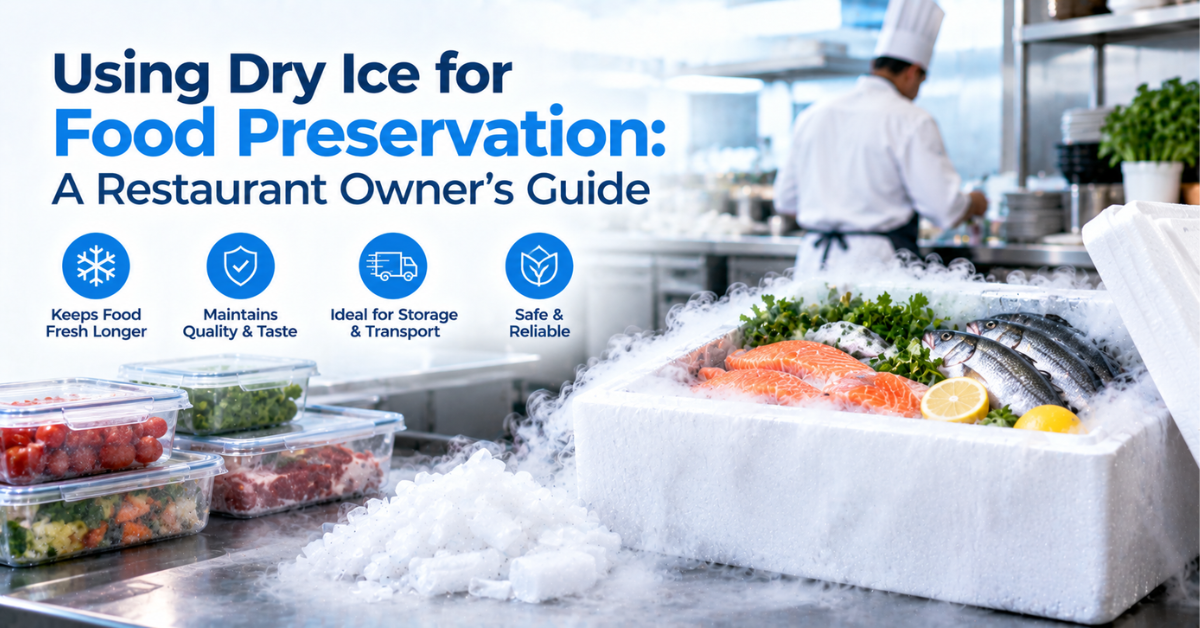
In a restaurant, cold storage is everything. A single freezer failure, a delayed delivery in the summer heat, or a poorly cooled catering order can cost thousands in spoiled stock and, worse, damage your reputation with customers. Restaurant owners across the UAE deal with these risks daily, which is why many have added dry ice to their toolkit as a flexible, powerful, and affordable way to protect food quality.
This guide is written for restaurant owners, chefs, and kitchen managers who want to understand how dry ice food preservation actually works, where it fits into daily operations, and how to use it safely. We also cover what to look for in a food grade dry ice supplier in the UAE, because the quality of what you buy directly affects the safety of what you serve.
Why Dry Ice Works So Well for Food Preservation?
Dry ice is solid carbon dioxide at about -78.5°C, far colder than the 0°C of regular ice. That extreme cold means it can keep food frozen for long periods, even in hot conditions. Just as importantly, dry ice does not melt into water. It sublimates directly into CO2 gas, so food stays dry, packaging stays intact, and there is no soggy, contaminated mess at the bottom of your cooler.
The CO2 gas released also displaces air around the food, which some operators find helps in cold, sealed-off environments such as insulated boxes. Combined with its portability and the fact that it needs no electricity, dry ice is a practical solution wherever mechanical refrigeration is unavailable, unreliable, or simply not enough.
Where Restaurants Use Dry Ice?
- Catering and off-site events: keeping ingredients and prepared dishes at safe temperatures for hours away from your kitchen
- Delivery and cloud kitchen operations: protecting frozen desserts, seafood, meat, and chilled items during last-mile delivery in hot weather
- Receiving and transporting supplies: maintaining the cold chain when collecting goods from suppliers, markets, or ports
- Emergency backup: protecting stock if a walk-in freezer fails or during a power outage
- Ice cream, gelato, and frozen dessert service: keeping products firm during transport and display at events
- Seafood and meat handling: preserving freshness during transport and short-term storage
- Special presentation: adding effects to dishes and displays, provided it is done with strict safety controls
Food Grade Dry Ice: Why It Matters for Restaurants
Not all dry ice is made for use around food. Industrial dry ice, produced for cleaning or manufacturing, may not meet the purity standards required when food is involved. Restaurants should always use food grade dry ice, which is produced from CO2 meeting food safety standards and handled in clean conditions.
Ask any supplier directly whether their product is food grade, how it is produced, and how it is packaged and delivered. A reliable supplier will answer clearly. If they cannot, that is a warning sign. Using the wrong grade risks contamination and puts your business at risk of failing food safety inspections.
How to Use Dry Ice Safely With Food?
When used correctly, dry ice is safe and effective in a food environment. The key principle is that food and dry ice should be kept in a controlled arrangement, with dry ice used for cooling and not for consumption. Follow these guidelines:
- Use insulated containers or coolers designed for low temperatures, and never airtight containers.
- Place a barrier, such as cardboard or a tray, between dry ice and delicate foods that can be damaged by freezer burn.
- Never allow dry ice to come into contact with drinks, and never let it be swallowed. It can cause serious injuries.
- Always wear insulated gloves and use tongs when handling it.
- Keep dry ice away from customers and untrained staff, particularly children.
- Label containers clearly so that no one mistakes dry ice for something else.
Kitchen Safety: Ventilation and Storage
The biggest hidden risk in restaurants is poor ventilation. As dry ice sublimates it releases CO2, which is heavier than air and can accumulate in low, enclosed spaces. Walk-in coolers, small storerooms, and delivery vehicles with closed cabins are the most common problem areas.
- Store dry ice only in well-ventilated spaces and never inside a walk-in cooler or small closed room.
- Never store dry ice in a standard kitchen freezer. It is colder than these units are designed for, and it can damage them.
- During transport, keep dry ice in ventilated cargo areas and never in a sealed passenger cabin.
- Make sure staff know the signs of CO2 exposure: headache, dizziness, rapid breathing. If these occur, get to fresh air immediately.
Building a Simple Dry Ice SOP for Your Kitchen
The most effective restaurants treat dry ice like any other food safety process, with a clear standard operating procedure. A basic SOP should cover:
- Who is authorized to receive, store, and handle dry ice
- Where dry ice is stored and how containers are labeled
- Required protective equipment, including gloves and eye protection
- How dry ice is packed for catering and delivery orders
- What to do in an emergency, including exposure to CO2 or skin contact
- How unused dry ice is disposed of, by allowing it to sublimate in a ventilated area
A one-page checklist posted where dry ice is handled, combined with short staff training, is usually enough to prevent most incidents.
The Cost Case: Is Dry Ice Worth It for a Restaurant?
For many restaurants, the value of dry ice is not in the price per kilogram but in the cost it prevents. A single spoiled catering order, a lost batch of seafood, or a melted dessert delivery can easily exceed a full month’s spend on dry ice. When you factor in the flexibility of using it for events, deliveries, and emergencies without buying more equipment, it becomes a very economical part of food safety planning.
Businesses that use it often can improve costs further by planning orders in advance and setting up scheduled deliveries rather than buying urgently at the last minute.
Choosing a Dry Ice Supplier for Your Restaurant
Restaurants need a supplier that understands the pace of a working kitchen. Look for food grade quality, reliable delivery, fair pricing, and the ability to adjust order sizes quickly as your needs change, for example during Ramadan, the tourism peak, or a big catering weekend.
Ice Dry Ice, a Dubai-based supplier, works with food businesses across the UAE and understands that in hospitality, a missed delivery can mean a failed service. Having a dependable partner, rather than depending on whoever has stock that day, brings consistency to a part of your operation that customers never see but always feel.
Mistakes Restaurant Owners Should Avoid
- Using industrial dry ice around food
- Storing dry ice in walk-in coolers or sealed containers
- Leaving it unlabeled or accessible to untrained staff
- Ordering too early and losing much of it to sublimation
- Relying on a single last-minute source with no backup supplier plan
Planning Dry Ice for a Busy Catering Weekend
Catering is where dry ice earns its place. Imagine you are serving a large wedding across town, with hot summer weather and a long drive. Your cold dishes, desserts, and frozen items need to arrive in perfect condition, and your kitchen has no chance to fix a problem once the vehicle has left.
A simple plan makes all the difference. Pre-chill or pre-freeze everything before packing, use good insulated boxes, add dry ice with a sensible buffer for delays, and keep the containers ventilated. Assign one trained team member to pack and check every box against a list. Then make sure your supplier knows your busiest weekends in advance, so that fresh, food grade dry ice is ready when you need it, and not on the day when everyone else is also calling.
Frequently Asked Questions
Can dry ice touch food directly?
Food grade dry ice can be used in close arrangement with food for cooling, but avoid direct contact with delicate items and never let it be eaten or placed in drinks.
How long will dry ice keep food frozen?
In a well-insulated container it can maintain freezing temperatures for many hours to a day or more, depending on the quantity and conditions. Always allow a margin for delays.
Is dry ice better than gel packs for deliveries?
For frozen goods, dry ice is generally far more effective because it reaches a much lower temperature. For products that must stay only chilled, it can be too cold, so it must be used carefully.
Can I keep dry ice in my restaurant freezer?
No. Standard freezers are not designed for it, and doing so can damage the unit. Use a dedicated insulated container in a ventilated space instead.
Final Thoughts
Dry ice is one of the simplest and most flexible tools available to protect food quality in a UAE restaurant. With food grade product, sensible safety habits, and a clear internal process, it can safeguard catering, deliveries, and emergency stock at a fraction of the cost of the losses it prevents.
Partnering with a reliable local supplier like Ice Dry Ice gives your kitchen a dependable source of food grade dry ice when you need it, so you can concentrate on what matters most: serving great food to your customers.