
How Liquid Nitrogen Powers Modern Cryotherapy Treatments

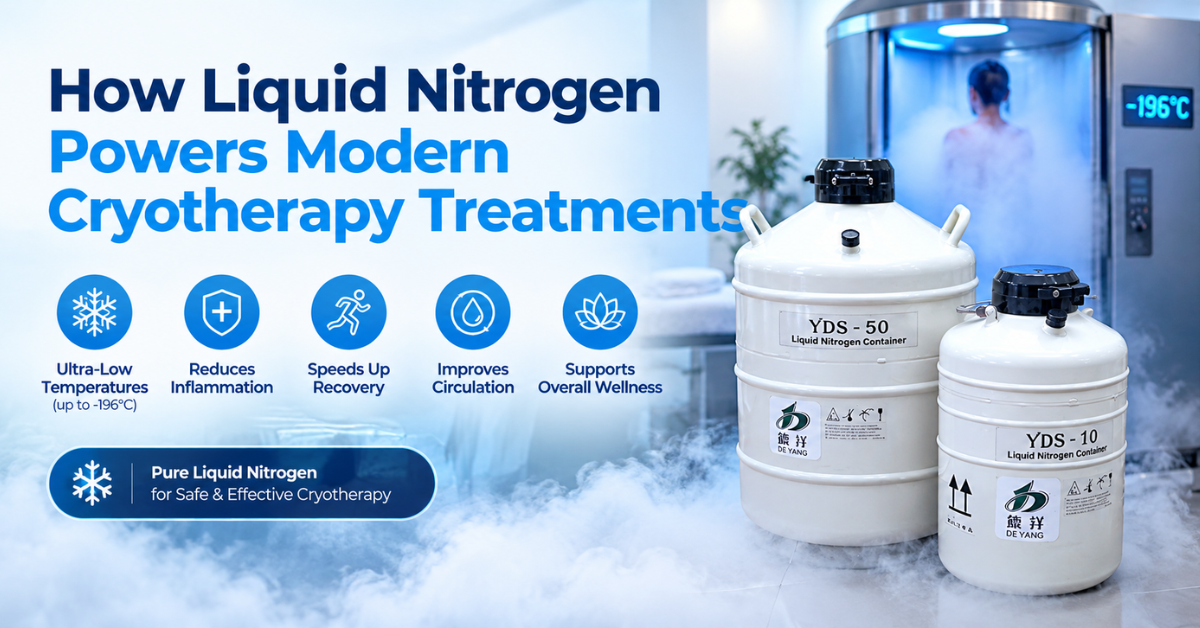
Walk into any modern wellness clinic, sports recovery center, or aesthetic studio in Dubai today and there is a good chance you will find a cryotherapy chamber humming quietly in the corner. Cryotherapy has moved from a niche treatment used mainly by professional athletes into a mainstream wellness service, offered everywhere from boutique recovery studios to five-star spas. Behind nearly every one of these treatments is the same substance: liquid nitrogen.
Liquid nitrogen for cryotherapy is what allows clinics to generate the extreme, controlled cold that whole-body and localized treatments depend on. This guide explains how liquid nitrogen actually powers cryotherapy, what happens to the body during a session, the safety systems that make it possible, and what clinics in the UAE should look for in a liquid nitrogen supplier to keep their equipment running safely and reliably.
What Is Liquid Nitrogen?
Nitrogen makes up about 78 percent of the air we breathe. When nitrogen gas is cooled to around -196°C, it becomes a liquid. Liquid nitrogen is colorless, odorless, and extremely cold, and because it boils at such a low temperature, it rapidly produces nitrogen gas when exposed to warmer air. This rapid, controllable production of intensely cold gas is exactly what makes it so useful for cryotherapy.
How Cryotherapy Chambers Use Liquid Nitrogen
In a typical whole-body cryotherapy chamber, liquid nitrogen is stored in an insulated tank connected to the chamber. During a session, the system releases controlled amounts of liquid nitrogen, which vaporizes into extremely cold nitrogen gas that circulates around the client’s body, usually for two to four minutes. The head generally remains outside or above the cold zone, and the client’s skin is exposed to temperatures that can drop well below -100°C for a short, carefully timed period.
Because liquid nitrogen vaporizes into gas rather than leaving any liquid residue, it allows for very precise, repeatable cooling that can be adjusted session to session. This is very different from older cryotherapy methods using ice baths or refrigerated air, which cool more slowly and are harder to control precisely.
What Happens to the Body During Cryotherapy
The extreme but brief cold exposure triggers a series of physiological responses. Blood vessels near the skin constrict, sending blood toward the body’s core to protect vital organs. When the session ends and the body warms again, blood flow returns to the skin and extremities, often described by clients as a rush of warmth and energy.
Proponents of cryotherapy point to a range of potential benefits linked to this response, including reduced muscle soreness after intense exercise, temporary relief from joint discomfort, improved mood and energy, and better sleep for some users. As with any wellness treatment, results vary between individuals, and clinics should always set realistic expectations rather than making medical claims.
Types of Liquid Nitrogen Cryotherapy Treatments
- Whole-body cryotherapy: clients stand in a chamber while cold nitrogen gas circulates around the body for a short session
- Partial or localized cryotherapy: a handheld device directs cold nitrogen gas at a specific area, such as a joint or muscle group
- Facial cryotherapy: a focused, gentler treatment used in some beauty and skincare routines
- Cryo-sauna treatments: single-person chambers where the head remains outside the cold zone throughout the session
Why Cryotherapy Clinics Depend on a Reliable Liquid Nitrogen Supply
Cryotherapy equipment is only as good as the liquid nitrogen behind it. Chambers are engineered to work with a steady, properly specified supply, and an unreliable or inconsistent delivery schedule can directly affect the quality and safety of every session. A clinic that runs out of liquid nitrogen mid-week is not just facing a minor inconvenience, it is turning away paying clients and risking its reputation.
Consistent supply also protects the equipment itself. Cryotherapy chambers are calibrated to specific liquid nitrogen flow rates and purity levels, and using the wrong grade or an inconsistent product can affect chamber performance and maintenance costs over time.
Safety Standards for Liquid Nitrogen Cryotherapy
Liquid nitrogen is extremely cold and, because it displaces oxygen as it vaporizes, requires careful ventilation and monitoring in any enclosed treatment space. Reputable clinics follow strict safety procedures that protect both clients and staff.
- Oxygen level monitors installed in treatment rooms to detect any drop caused by nitrogen gas buildup
- Well-ventilated spaces, with chambers typically designed so the client’s head stays above the cold gas and outside the chamber in most whole-body systems
- Strict session time limits, usually a few minutes, supervised by trained staff
- Protective gear for clients, including dry socks, gloves, and closed footwear, since direct contact with liquid nitrogen or extremely cold surfaces can cause frostbite
- Pre-screening clients for conditions that may make cryotherapy unsuitable, such as certain cardiovascular or circulatory issues
- Regular equipment maintenance and calibration by qualified technicians
Staff handling liquid nitrogen tanks and refilling chamber reservoirs should be trained in safe handling, including the use of insulated gloves and eye protection, and should never work in poorly ventilated storage rooms.
What Clinics Should Look for in a Liquid Nitrogen Supplier
Not every industrial gas supplier is set up to serve the specific needs of a cryotherapy business. Clinics should look for a supplier who understands the purity requirements of cryotherapy equipment, can deliver on a reliable weekly or biweekly schedule, and offers the right tank sizes and connections for their chamber model.
- Consistent purity and quality suited to cryotherapy equipment specifications
- Dependable delivery schedules that match how quickly a clinic uses its supply
- Appropriate storage tanks or dewars, with guidance on safe handling and refilling
- Fast response for urgent top-ups during busy periods
- Clear safety documentation and support for staff training
Ice Dry Ice, based in Dubai, supplies liquid nitrogen to wellness clinics and businesses across the UAE, alongside its dry ice supply services. For cryotherapy studios, having a single trusted partner who understands both the technical requirements and the pace of a busy clinic schedule makes day-to-day operations considerably smoother.
Cost Considerations for Cryotherapy Businesses
Liquid nitrogen consumption is one of the main ongoing costs for a cryotherapy business, alongside electricity and equipment maintenance. Usage depends on chamber type, session frequency, and ambient conditions, since liquid nitrogen naturally evaporates over time even when stored correctly. Clinics that plan their supply around actual usage patterns, rather than ordering reactively, tend to manage this cost more predictably and avoid the premium that often comes with emergency orders.
The Growing Popularity of Cryotherapy in the UAE
The UAE’s wellness and fitness sector has grown rapidly, and cryotherapy fits naturally into a market that already embraces recovery-focused services, from ice baths to infrared saunas. Athletes, fitness enthusiasts, and everyday clients across Dubai and Abu Dhabi increasingly see cryotherapy as part of a broader recovery and wellness routine, which continues to drive demand for clinics and, in turn, for reliable liquid nitrogen supply behind the scenes.
What to Expect During a First Cryotherapy Session
For clients trying cryotherapy for the first time, knowing what to expect helps ease any nerves. Staff typically explain the process beforehand, confirm there are no medical contraindications, and provide protective items such as gloves, socks, and footwear. Clients enter the chamber in minimal, dry clothing, and the session itself usually lasts only a few minutes, with staff monitoring the client throughout and ending the session immediately if there is any discomfort.
Most clients describe the sensation as an intense but bearable cold, followed by a noticeable warming and energizing feeling once the session ends. Clinics that explain this clearly tend to see higher client confidence and repeat bookings, which is part of why staff training and a calm, professional environment matter just as much as the equipment itself.
Maintaining Equipment for Consistent Results
Cryotherapy chambers require regular maintenance to perform safely and consistently, including checks on nitrogen delivery systems, oxygen monitors, and temperature sensors. A clinic’s maintenance schedule works hand in hand with its liquid nitrogen supply: reliable, properly specified product reduces strain on equipment, while inconsistent or incorrect liquid nitrogen can contribute to performance issues over time. This is another reason many clinics prefer to stay with one trusted supplier rather than switching between providers to chase small price differences.
Frequently Asked Questions
Is liquid nitrogen cryotherapy safe?
When performed in a properly ventilated, monitored facility with trained staff and appropriate protective equipment, cryotherapy is considered safe for most healthy adults. Clients with certain medical conditions should consult a doctor before trying it.
How cold does cryotherapy get?
Whole-body cryotherapy chambers typically expose the body to temperatures well below -100°C for a short period, usually a few minutes, with the exact range depending on the equipment and clinic protocol.
Does liquid nitrogen touch the skin during cryotherapy?
No. In a properly operated chamber, the liquid nitrogen vaporizes into cold gas before it reaches the client, and direct contact with liquid nitrogen is avoided entirely.
How often does a cryotherapy clinic need liquid nitrogen delivered?
This depends on chamber usage and tank size, but many clinics schedule deliveries weekly or more frequently during busy periods, since liquid nitrogen evaporates gradually even in storage.
Final Thoughts
Liquid nitrogen is the quiet engine behind one of the wellness industry’s fastest-growing treatments. Its unique ability to produce rapid, controllable, extreme cold is what makes modern cryotherapy chambers work safely and consistently. For clinics across the UAE, the quality and reliability of that liquid nitrogen supply directly shapes the client experience.
Working with an established local supplier such as Ice Dry Ice gives cryotherapy businesses one less thing to worry about, with consistent, properly handled liquid nitrogen delivered on a schedule that keeps every chamber running when clients walk through the door.